Discover Your Planetary Influences
Get your free Kundli and see which Navagraha shapes your destiny
100% FREE • No credit card required
Who Are the Nine Planetary Deities (Navagraha) and How Do They Influence Your Life?
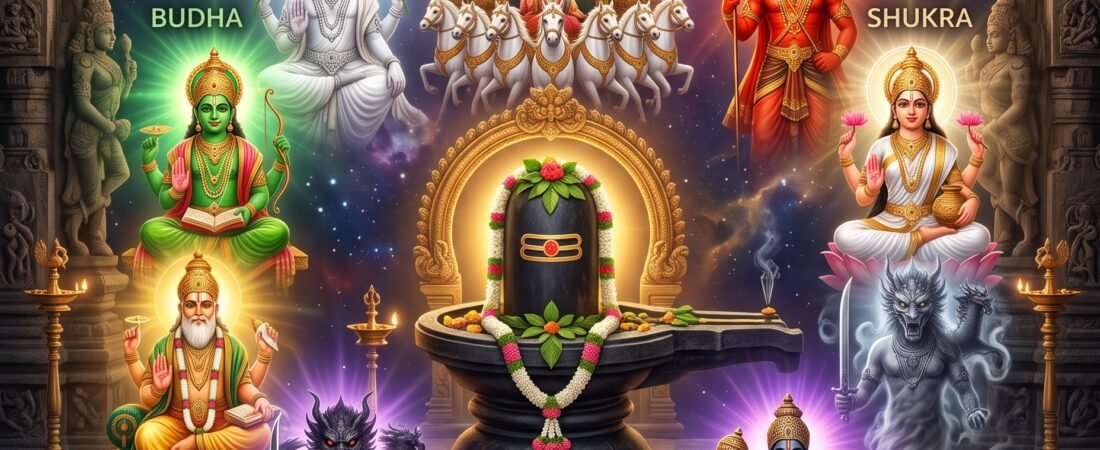
The Navagraha are nine planetary deities in Vedic astrology who govern different aspects of human life, from career and relationships to health and spiritual growth. Ancient texts like the Brihat Parashara Hora Shastra describe these celestial beings as cosmic forces that shape your destiny based on their positions at the time of your birth.
Understanding the Navagraha helps you recognize which planetary energies are strong or weak in your Kundli, allowing you to make informed decisions and perform appropriate remedies. In Vedic tradition, each Graha (planet) is not just a physical celestial body but a divine consciousness with specific qualities, preferences, and influences on human affairs.
The Nine Navagraha: Divine Rulers of Your Destiny
Vedic astrology identifies nine planetary deities, each governing specific life domains and possessing unique characteristics. These deities are worshipped across India, and their positions in your birth chart determine the strengths and challenges you’ll encounter throughout life.
1. Surya (Sun) – The Soul and Authority
Surya represents the soul, father figure, government authority, and vital life force. As the king of planets, Surya governs leadership qualities, confidence, and spiritual illumination. A strong Sun gives you charisma, decision-making ability, and good health, while a weak Sun can cause ego issues, lack of direction, or conflicts with authority figures.
Domain: Career, government, father, health, confidence
Day: Sunday
Color: Gold, orange, copper
Mantra: “Om Suryaya Namah”
2. Chandra (Moon) – The Mind and Emotions
Chandra governs the mind, emotions, mother, and public image. The Moon’s position determines your emotional stability, intuition, and ability to nurture others. A well-placed Moon brings mental peace, strong intuition, and a caring nature, while an afflicted Moon can cause mood swings, anxiety, or maternal relationship issues.
Domain: Mind, emotions, mother, public reputation, intuition
Day: Monday
Color: White, silver, cream
Mantra: “Om Chandraya Namah”
3. Mangal (Mars) – Energy and Courage
Mangal represents energy, courage, siblings, property, and technical abilities. Mars gives you the drive to achieve goals, physical strength, and the ability to overcome obstacles. A strong Mars makes you ambitious and protective, while an afflicted Mars can cause anger issues, accidents, or conflicts with siblings.
Domain: Energy, courage, siblings, property, technical skills
Day: Tuesday
Color: Red, coral
Mantra: “Om Mangalaya Namah”
4. Budha (Mercury) – Intelligence and Communication
Budha governs intelligence, communication, business acumen, and learning abilities. Mercury determines how you process information, express ideas, and handle commerce. A strong Mercury gives you sharp intellect, good memory, and excellent communication skills, while a weak Mercury can cause learning difficulties or poor decision-making.
Domain: Intelligence, communication, education, business, humor
Day: Wednesday
Color: Green
Mantra: “Om Budhaya Namah”
5. Guru (Jupiter) – Wisdom and Fortune
Guru (also called Brihaspati) represents wisdom, spirituality, children, wealth, and good fortune. Jupiter is the most benefic planet, governing dharma, expansion, and divine grace. A strong Jupiter brings prosperity, spiritual growth, and good children, while an afflicted Jupiter can cause financial losses or spiritual confusion.
Domain: Wisdom, spirituality, children, wealth, fortune
Day: Thursday
Color: Yellow, gold
Mantra: “Om Gurave Namah”
6. Shukra (Venus) – Love and Luxury
Shukra governs love, marriage, beauty, arts, vehicles, and material comforts. Venus determines your capacity for romance, aesthetic appreciation, and enjoyment of life’s pleasures. A strong Venus brings harmonious relationships, artistic talent, and material abundance, while a weak Venus can cause relationship problems or lack of creativity.
Domain: Love, marriage, beauty, arts, luxury, vehicles
Day: Friday
Color: White, pink, pastels
Mantra: “Om Shukraya Namah”
7. Shani (Saturn) – Karma and Discipline
Shani represents karma, discipline, longevity, service, and life lessons. Saturn is the great teacher who brings structure through challenges and delays. A strong Saturn gives you discipline, patience, and the ability to endure hardships, while an afflicted Saturn can cause delays, obstacles, and chronic health issues. Shani’s famous Sade Sati period (7.5 years) is considered transformative rather than purely negative.
Domain: Karma, discipline, career, longevity, service
Day: Saturday
Color: Black, dark blue
Mantra: “Om Shanaye Namah”
8. Rahu – Ambition and Material Desire
Rahu is the north lunar node, representing ambition, foreign connections, technology, and unconventional paths. Though not a physical planet, Rahu is considered a shadow planet with intense influence. Rahu drives your material desires, innovation, and willingness to break traditions. A well-placed Rahu brings sudden success and technological aptitude, while an afflicted Rahu can cause addictions, deception, or unconventional problems.
Domain: Ambition, foreign lands, technology, innovation, obsession
Day: Saturday (with Shani)
Color: Smoky, dark
Mantra: “Om Rahave Namah”
9. Ketu – Spirituality and Detachment
Ketu is the south lunar node, representing spirituality, past life karma, detachment, and mystical experiences. Ketu drives you toward liberation (moksha) and helps you release attachments. A strong Ketu gives you spiritual insight and intuition, while an afflicted Ketu can cause confusion, isolation, or sudden losses that force spiritual growth.
Domain: Spirituality, past karma, detachment, liberation, intuition
Day: Tuesday (with Mangal)
Color: Grey, earthy tones
Mantra: “Om Ketave Namah”
How the Navagraha Influence Your Daily Life
The nine planetary deities don’t just operate at birth—they continuously influence your life through transits (Gochar). As planets move through different zodiac signs and houses, they activate specific areas of your life. For example:
- Jupiter’s transit through your 2nd house can bring financial expansion
- Saturn’s transit through your 7th house tests your relationships
- Rahu’s transit through your 10th house can bring sudden career changes
- Venus’s transit through your 5th house enhances romance and creativity
Understanding these transits helps you time important decisions—when to start a business, when to marry, when to focus on spiritual practices. This is why consulting your daily Rashifal (horoscope) provides practical guidance aligned with planetary movements.
Navagraha Remedies: Balancing Planetary Energies
Vedic astrology offers various remedies to strengthen weak planets or pacify afflicted ones. These remedies work on the principle that specific actions, materials, and mantras resonate with planetary frequencies:
Common Navagraha Remedies
| Planet | Remedy | When to Perform |
|---|---|---|
| Surya (Sun) | Offer water to rising Sun, wear ruby | Weak confidence, father issues |
| Chandra (Moon) | Wear pearl, offer milk to Shiva | Emotional instability, anxiety |
| Mangal (Mars) | Donate red lentils, wear coral | Anger issues, sibling conflicts |
| Budha (Mercury) | Feed green grass to cows, wear emerald | Learning difficulties, communication problems |
| Guru (Jupiter) | Donate yellow items, respect elders | Financial losses, lack of wisdom |
| Shukra (Venus) | Wear diamond, donate white items | Relationship problems, lack of creativity |
| Shani (Saturn) | Donate black items, serve elderly | Delays, obstacles, chronic issues |
| Rahu | Donate blue items, feed birds | Addictions, unconventional problems |
| Ketu | Meditation, donate to spiritual causes | Confusion, isolation, sudden losses |
Important: Before performing any remedy, consult your Kundli to confirm which planet needs strengthening. Incorrect remedies can sometimes worsen the situation. Astrova AI’s free Kundli analysis identifies your planetary strengths and weaknesses, helping you choose the right remedies.
See Which Navagraha Dominates Your Chart
Get your personalized planetary analysis in 2 minutes
The Mythology Behind Navagraha Worship
Ancient Hindu texts describe the origin of the Navagraha in fascinating detail. According to the Vishnu Purana and Bhagavata Purana, the planetary deities were born from the cosmic union of divine beings:
- Surya was born from the cosmic egg (Brahmanda) and became the source of all light
- Chandra emerged from the churning of the ocean (Samudra Manthan) and married the 27 Nakshatras
- Mangal was born from Mother Earth’s sweat when she was troubled by demons
- Budha was born from Moon (Chandra) and Tara (wife of Jupiter)
- Guru emerged as the priest of the gods, teaching them wisdom and strategy
- Shukra became the guru of demons, mastering the art of resurrection (Mrita Sanjeevani)
- Shani was born from Surya and his wife Chhaya (shadow), cursed to move slowly
- Rahu and Ketu were born from the demon Swarbhanu, who tried to steal the nectar of immortality during the ocean churning
These stories aren’t just mythology—they encode astronomical knowledge and spiritual truths. The Navagraha temple tradition (especially the nine temples in Tamil Nadu) reflects the understanding that planetary energies can be harmonized through devotion and ritual.
How to Check Your Navagraha Positions
Your birth chart (Kundli) shows the exact positions of all nine planets at the moment of your birth. Each planet occupies a specific house (Bhava) and zodiac sign (Rashi), determining which life areas they influence most strongly.
For example:
- If Jupiter is in your 10th house, you’re likely to have a career in teaching, law, or spirituality
- If Venus is in your 7th house, you’ll have a harmonious marriage and artistic partner
- If Saturn is in your 8th house, you’ll face transformative challenges that build inner strength
Understanding your Navagraha positions helps you make better decisions about career, relationships, health, and spiritual practices. It also reveals your karmic patterns and life purpose.
How Astrova AI Helps You Understand the Navagraha
Astrova AI makes Vedic astrology accessible by generating your complete Kundli with detailed Navagraha analysis in minutes. Here’s what you get:
- Complete Navagraha Chart: See the exact positions of all nine planets in your birth chart
- Planetary Strength Analysis: Understand which planets are strong (exalted, own sign) or weak (debilitated, enemy sign)
- House Placement Insights: Learn how each planet influences specific life areas
- Remedy Recommendations: Get personalized suggestions for balancing planetary energies
- Daily Transit Updates: Track how current planetary movements affect you
- AI Astrologer Chat: Ask questions about your Navagraha and get instant answers
Best of all, Astrova AI is 100% free with no hidden charges. You can generate unlimited Kundlis, check daily Rashifal, and consult the AI astrologer anytime, anywhere.
Frequently Asked Questions
Q1: Are the Navagraha actual gods or just symbolic?
A: In Vedic tradition, the Navagraha are considered divine consciousnesses (devatas) who govern cosmic laws. They’re both symbolic representations of planetary energies and actual celestial beings with consciousness. Different philosophical schools interpret them differently, but all agree they influence human life.
Q2: Can I worship all nine planets, or should I focus on one?
A: You can worship all nine, but it’s often recommended to focus on the planet that’s weak in your chart or the one governing your current Dasha period. For example, if you’re going through Saturn’s Sade Sati, worshipping Shani helps you navigate the period smoothly.
Q3: Do planetary remedies really work?
A: Vedic astrology has practiced remedies for thousands of years with reported success. Remedies work on the principle of resonance—specific materials, mantras, and actions align with planetary frequencies. However, remedies should complement good karma and practical effort, not replace them.
Q4: What’s the difference between Rahu-Ketu and other planets?
A: Rahu and Ketu are shadow planets (lunar nodes), not physical celestial bodies. They represent karmic axes—Rahu drives material ambition while Ketu drives spiritual liberation. Their influence is intense and often sudden, causing major life shifts during their transits and Dashas.
Q5: How often do planetary positions change?
A: Fast-moving planets like Moon change signs every 2.5 days, while slow planets like Saturn stay in a sign for 2.5 years. Rahu and Ketu change signs every 18 months. Your daily Rashifal tracks these movements and their impact on your moon sign.
Explore More Astrova Guides
Continue your Vedic astrology journey with these comprehensive guides:
- AI Palm Reading Complete Guide – Discover your destiny through your palm lines
- Kundli Milan Marriage Compatibility Guide – Check relationship harmony through Guna matching
- How to Check Daily Rashifal – Get daily planetary guidance for your zodiac sign
- Sade Sati Explained – Understand Saturn’s 7.5-year cycle and remedies
- Vedic Planetary Remedies (Navagraha Guide) – Detailed remedies for all nine planets
- AI Astrology Complete Guide – How artificial intelligence is transforming Vedic astrology
About the Author
Astrova AI Editorial Team
The Astrova AI Editorial Team combines traditional Vedic astrology knowledge with modern AI technology. Our content is based on classical texts including Brihat Parashara Hora Shastra, Phaladeepika, and Jataka Parijata, ensuring authentic guidance rooted in thousands of years of astrological wisdom.
We believe Vedic astrology should be accessible to everyone, which is why we’ve built Astrova AI—a free platform that brings the depth of Jyotish Shastra to your smartphone.
For questions or corrections, reach us at support@theastrova.com
Ready to Explore Your Navagraha?
Join thousands discovering their planetary destiny with Astrova AI
100% FREE • No credit card • Available in 9 Indian languages
Related posts:
 How to read your own palm at home — step-by-step guide — Complete Guide 2026
 How to check your daily Rashifal using your Moon sign — step by step — Complete Guide 2026
 How to identify Kaalsarp Dosha in your Kundli — visual guide — Complete Guide 2026
How accurate is AI Kundli matching vs traditional astrologer matching? — Complete Guide 2026
How to identify Kaalsarp Dosha in your Kundli — visual guide — Complete Guide 2026
How accurate is AI Kundli matching vs traditional astrologer matching? — Complete Guide 2026