What Are the Navagraha and How Do They Shape Your Life?
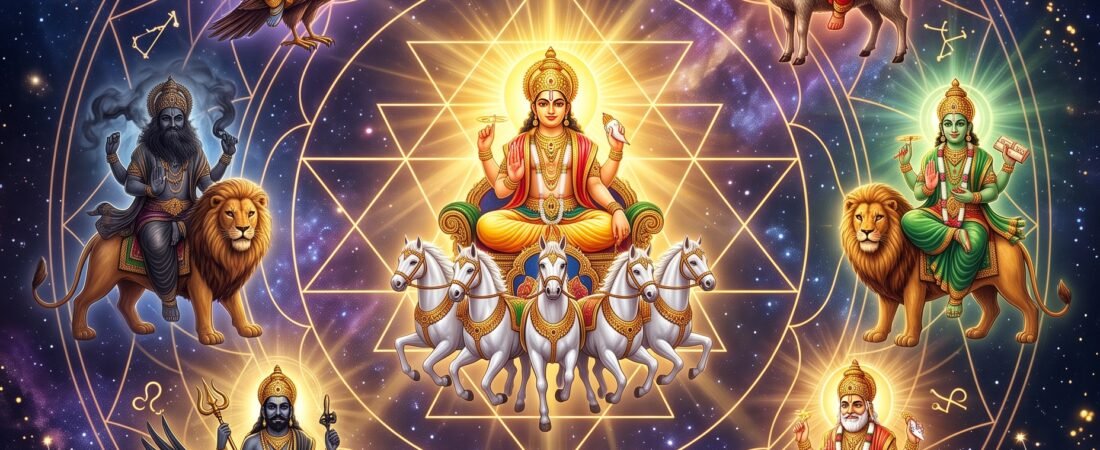
The Navagraha are the 9 planetary deities of Vedic astrology: Surya, Chandra, Mangal, Budh, Guru, Shukra, Shani, Rahu and Ketu. They are worshipped as living divine forces. Their placement in your Kundli shapes your opportunities, challenges and relationships, and each has its own mantra, gemstone and remedies.
Every moment of your life — the opportunities you get, the challenges you face, the people you meet — is influenced by nine cosmic forces that ancient Vedic sages called the Navagraha. These are not mere planets in the astronomical sense. They are living divine energies, each governed by a deity, each carrying a specific karmic purpose in your birth chart.
If you have ever wondered why certain periods of your life feel blessed while others feel like an uphill battle, the answer lies in understanding which Graha is active in your Kundli and what it is trying to teach you.
⬇ Download Astrova AI — FREE Kundli & Rashifal
Who Are the Nine Planetary Deities?
The word Navagraha comes from Sanskrit — nava meaning nine and graha meaning “that which seizes” or “that which influences.” The nine Grahas are the cosmic forces that seize your karma and deliver its fruits at the right time. Here is each deity, their domain, and what they govern in your life:
1. Surya (Sun) — The Soul
Deity: Surya Dev, the visible form of the Supreme Brahman in Vedic tradition.
Governs: Your soul, vitality, confidence, government authority, father, and spiritual purpose.
Day: Sunday (Ravivar).
Mantra: Om Hram Hreem Hroum Sah Suryaya Namah
Surya is the king of the Navagraha. In your Kundli, a strong Sun gives leadership ability, radiant health, and a clear sense of purpose. A weak Sun can cause low confidence, health issues related to bones and eyes, and friction with authority figures.
2. Chandra (Moon) — The Mind
Deity: Chandra Dev, the lord of emotions and the subconscious.
Governs: Your mind, emotions, mother, mental peace, and public image.
Day: Monday (Somvar).
Mantra: Om Shram Shreem Shroum Sah Chandraya Namah
The Moon is so important in Vedic astrology that your Moon sign matters more than your Sun sign. A well-placed Moon gives emotional stability, intuition, and a magnetic personality. A afflicted Moon can cause anxiety, mood swings, and digestive issues.
3. Mangala (Mars) — The Warrior
Deity: Mangal Dev, the commander of the celestial army, born from Lord Shiva’s sweat.
Governs: Courage, energy, siblings, land, marriage compatibility (Mangal Dosha), and technical ability.
Day: Tuesday (Mangalvar).
Mantra: Om Kram Kreem Kroum Sah Bhaumaya Namah
Mars is the planet of action and aggression. A strong Mars gives physical strength, leadership in crisis, and the courage to fight for what is right. Mars plays a critical role in Kundli Milan for marriage — Mangal Dosha (Mars affliction) must be checked before any wedding.
4. Budha (Mercury) — The Prince
Deity: Budha Dev, son of Chandra (Moon), the god of intelligence and communication.
Governs: Intellect, speech, education, commerce, mathematics, and adaptability.
Day: Wednesday (Budhvar).
Mantra: Om Bram Breem Broum Sah Budhaya Namah
Mercury rules your ability to learn, speak, and do business. A strong Mercury gives sharp wit, excellent memory, and success in education and trade. It also governs your sense of humor and how you process information.
5. Brihaspati (Jupiter) — The Guru
Deity: Brihaspati, the priest and teacher of the Devas, embodiment of wisdom and dharma.
Governs: Wisdom, spirituality, children, wealth expansion, luck, and marriage (for women).
Day: Thursday (Guruvar).
Mantra: Om Gram Greem Groum Sah Gurave Namah
Jupiter is the most benefic planet in Vedic astrology. It is called Jeeva — the life force itself. Jupiter’s grace brings expansion in every area it touches: wealth, knowledge, family, and spiritual growth. Its Dasha (major period) lasting 16 years is often the most prosperous phase of a person’s life.
6. Shukra (Venus) — The Counselor
Deity: Shukracharya, the guru of the Asuras and master of luxury arts.
Governs: Love, marriage, beauty, arts, vehicles, sensual pleasure, and material comfort.
Day: Friday (Shukravar).
Mantra: Om Dram Dreem Droum Sah Shukraya Namah
Venus is the planet of desire and refinement. A strong Venus gives artistic talent, harmonious relationships, financial comfort, and an appreciation for beauty. It is the primary significator of marriage and romantic love in your Janam Kundli.
7. Shani (Saturn) — The Judge
Deity: Shani Dev, son of Surya and Chhaya, the lord of karma and justice.
Governs: Discipline, hard work, delays, longevity, service, and karmic lessons.
Day: Saturday (Shanivar).
Mantra: Om Pram Preem Proum Sah Shanaischaraya Namah
Shani is the most feared Graha, but this fear is based on misunderstanding. Shani does not punish — he delivers the exact fruit of your past karma. His famous Sade Sati cycle (7.5 years of Saturn transiting over your Moon sign) is actually a period of profound transformation, not mere suffering. Those who surrender to Shani’s lessons emerge stronger, wiser, and more grounded.
8. Rahu — The Shadow of Desire
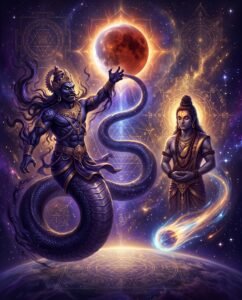
Deity: Rahu has no physical body — it is the head of the demon Swarbhanu who drank the nectar of immortality.
Governs: Obsession, foreign lands, technology, sudden gains, illusions, and unconventional paths.
Day: No day (associated with Saturday).
Mantra: Om Bhram Bhreem Bhroum Sah Rahave Namah
Rahu amplifies whatever it touches in your chart. It creates intense desire and unconventional ambition. In modern times, Rahu governs technology, social media, AI, and everything that breaks tradition. A well-placed Rahu can make you a pioneer; an afflicted Rahu creates addiction and illusion.
9. Ketu — The Shadow of Liberation
Deity: Ketu is the tail of Swarbhanu — the bodyless serpent representing detachment and moksha.
Governs: Spirituality, past-life karma, sudden losses, mystical experiences, and liberation.
Day: No day (associated with Tuesday).
Mantra: Om Sram Sreem Sroum Sah Ketave Namah
Ketu is the most mystical Graha. It takes away material attachments to push you toward spiritual growth. Ketu’s influence often feels confusing because it operates beyond logic — it is the planet of enlightenment through surrender. Many great saints and mystics had strong Ketu placements.
How the Navagraha Work Together: The Cosmic Balance
The nine Grahas do not operate in isolation. They form a living system of checks and balances:
| Relationship | Planets | Effect in Your Life |
|---|---|---|
| Natural Friends | Sun-Moon-Mars | Jupiter-Saturn | Mercury-Venus | When these pairs are conjunct or aspecting each other, results are generally harmonious |
| Natural Enemies | Sun-Saturn | Mars-Saturn | Rahu-Ketu axis | These combinations create internal tension that drives growth through challenge |
| The Guru-Shukra Axis | Jupiter vs Venus | Spiritual wisdom vs material desire — the eternal tug of war in every soul |
| The Shadow Axis | Rahu-Ketu | Always opposite each other; they create the karmic tension between worldly desire and spiritual liberation |
Which Navagraha Is Most Active in Your Life Right Now?
The answer depends on two factors in your Kundli:
- Your current Mahadasha and Antardasha — the planetary periods running based on your Moon’s position at birth. Each Graha rules a specific number of years: Sun (6), Moon (10), Mars (7), Rahu (18), Jupiter (16), Saturn (19), Mercury (17), Ketu (7), Venus (20).
- Current planetary transits (Gochar) — where the planets are in the sky right now relative to your Moon sign. For example, when Saturn transits your 7th house, it reshapes your relationships; when Jupiter transits your 2nd house, it expands your wealth.
The fastest way to find out which Graha is shaping your current phase is to generate your free Janam Kundli on Astrova AI — it shows your active Dasha, Antardasha, and current transits in seconds.
Simple Daily Remedies for Each Navagraha
Vedic tradition offers simple, accessible remedies to strengthen weak planets and pacify difficult ones. These are not superstition — they are vibrational practices that align your personal energy with the cosmic frequency of each Graha:
| Graha | Day | Simple Remedy | Color |
|---|---|---|---|
| Surya (Sun) | Sunday | Offer water to the rising Sun at dawn; chant Aditya Hridayam | Gold / Orange |
| Chandra (Moon) | Monday | Drink water from a silver vessel; wear white; meditate under moonlight | White / Silver |
| Mangala (Mars) | Tuesday | Donate red lentils; Hanuman Chalisa recitation; avoid anger | Red |
| Budha (Mercury) | Wednesday | Feed green vegetables to cows; wear green; study sacred texts | Green |
| Brihaspati (Jupiter) | Thursday | Respect teachers and elders; donate yellow food; wear turmeric | Yellow / Gold |
| Shukra (Venus) | Friday | Wear clean white clothes; offer white flowers; practice gratitude in relationships | White / Pink |
| Shani (Saturn) | Saturday | Serve the elderly and disabled; donate black sesame; light a sesame oil lamp | Black / Dark Blue |
| Rahu | Saturday | Avoid intoxicants; donate to流浪 (wandering) causes; practice grounding meditation | Smoky Grey / Blue |
| Ketu | Tuesday | Practice detachment; donate to spiritual causes; meditate on the formless | Multi-colored / Smoke |
How Astrova AI Helps You Understand Your Navagraha
Understanding which planets are active in your life used to require consulting a Jyotish pandit and waiting days for a Kundli reading. Astrova AI brings this ancient wisdom to your phone in seconds:
- Free Janam Kundli — See exactly where all 9 Grahas are placed in your birth chart, which houses they occupy, and which aspects they cast.
- Dasha Timeline — Know which planetary period you are in and what to expect for the coming months.
- Daily Rashifal in 9 Languages — Get transit-based predictions every morning based on your Moon sign’s relationship with today’s planetary positions.
- 24/7 AI Astrologer — Ask specific questions like “Why is my career stuck?” and get answers rooted in your actual chart, not generic horoscopes.
- Kundli Milan — Check Mangal Dosha and Guna matching before marriage.
- Sade Sati & Kaalsarp Analysis — Understand if you are under Saturn’s or Rahu-Ketu’s transformative influence.
⬇ Get Your Free Navagraha Analysis Now
Frequently Asked Questions
What is the difference between Graha and planet?
In Western astronomy, a planet is a physical body orbiting the Sun. In Vedic astrology, a Graha is a cosmic intelligence that “seizes” your karma and delivers its results. The Navagraha include the Sun and Moon (which are not planets astronomically) plus Rahu and Ketu (which are mathematical points, not physical bodies). The Graha concept is spiritual, not merely astronomical.
Which Navagraha is the most powerful?
Surya (Sun) is called the king of the Navagraha because it represents the soul — without the soul, nothing else functions. However, the “most powerful” Graha for YOU depends on your specific Kundli. A well-placed Jupiter in your chart can be more beneficial than a strong Sun, and vice versa. Power is contextual, not absolute.
Can Navagraha remedies really change my life?
Remedies (upayas) work on the principle of vibrational alignment. Just as a tuning fork can bring a guitar string into harmony, specific mantras, colors, donations, and rituals can shift your personal frequency to work with — rather than against — the cosmic forces active in your chart. The classical text Brihat Parashara Hora Shastra dedicates entire chapters to remedial measures for each Graha.
How often do the Navagraha influences change?
The Mahadasha system changes major periods every 6-20 years depending on the planet. Antardasha (sub-periods) change every few months to a few years. Daily transits shift every day as planets move through the zodiac. The fastest-moving are the Moon (daily) and Mercury/Venus (weekly); the slowest are Rahu/Ketu (18 months per sign) and Saturn (2.5 years per sign).
Are Rahu and Ketu real planets?
Astronomically, Rahu and Ketu are the lunar nodes — the points where the Moon’s orbit crosses the ecliptic (the Sun’s apparent path). They are not physical bodies but mathematical intersection points. In Vedic astrology, however, they are treated as full Grahas with immense karmic significance. Rahu is the north node (ascending) and Ketu is the south node (descending). Together they create eclipses and trigger major life shifts.
Explore More Astrova Guides
- How to Generate Your Janam Kundli Online for Free
- How to Check Your Daily Rashifal Using Your Moon Sign
- What Is Kundli Milan and Why Does It Matter for Your Marriage?
- How to Check if You Have Sade Sati — Step-by-Step Kundli Guide
- How to Read Your Own Palm at Home — Step-by-Step Guide
- What Is an AI Astrologer? Your 24/7 Vedic Astrology Guide
About the Author
Astrova AI Editorial — The Astrova editorial team combines traditional Jyotish scholarship with modern AI technology. Our content is rooted in classical texts including Brihat Parashara Hora Shastra, Phaladeepika by Mantreswara, Saravali by Kalyana Varma, and Jataka Parijata by Vaidyanatha Dikshita. We believe ancient Vedic wisdom should be accessible to everyone — which is why the Astrova app is 100% free.
Get your personalised reading in the Astrova AI app
Free AI palm reading, Janam Kundli and daily Rashifal on your phone.
Related posts:
 Who Are the Navagrahas? The Nine Planetary Deities Who Shape Your Destiny
 The Samudra Manthan Story: How Rahu and Ketu Were Born From the Churning of the Cosmic Ocean
 What Is the Mythology of Rahu and Ketu — and Why Do They Rule Eclipses in Vedic Astrology?
 What Is Samudra Manthan And How Does It Connect To Rahu, Ketu And Your Kundli?