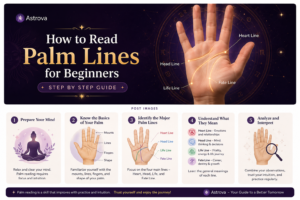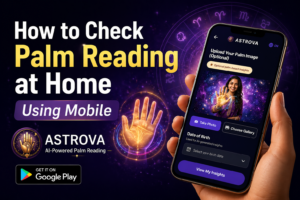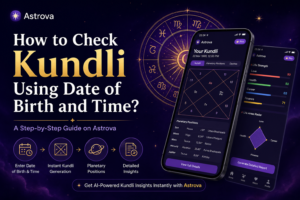
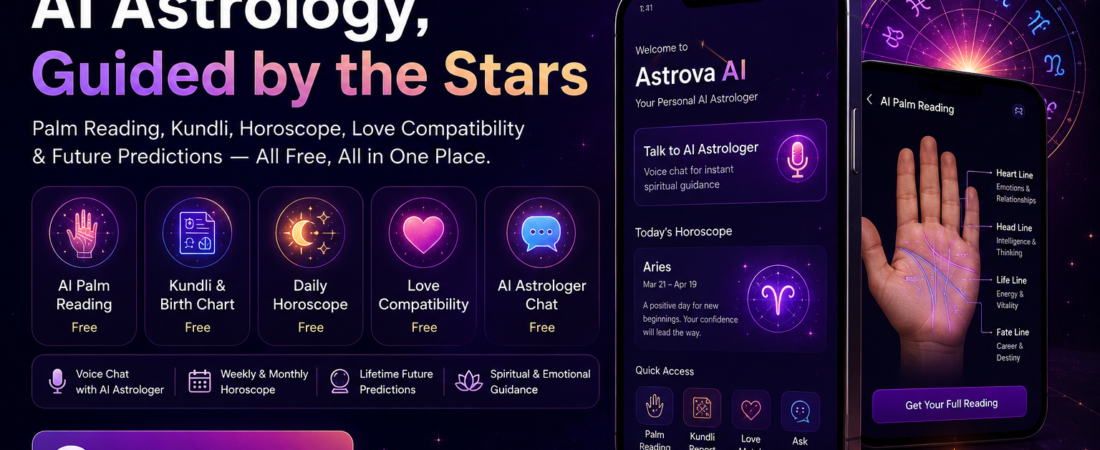
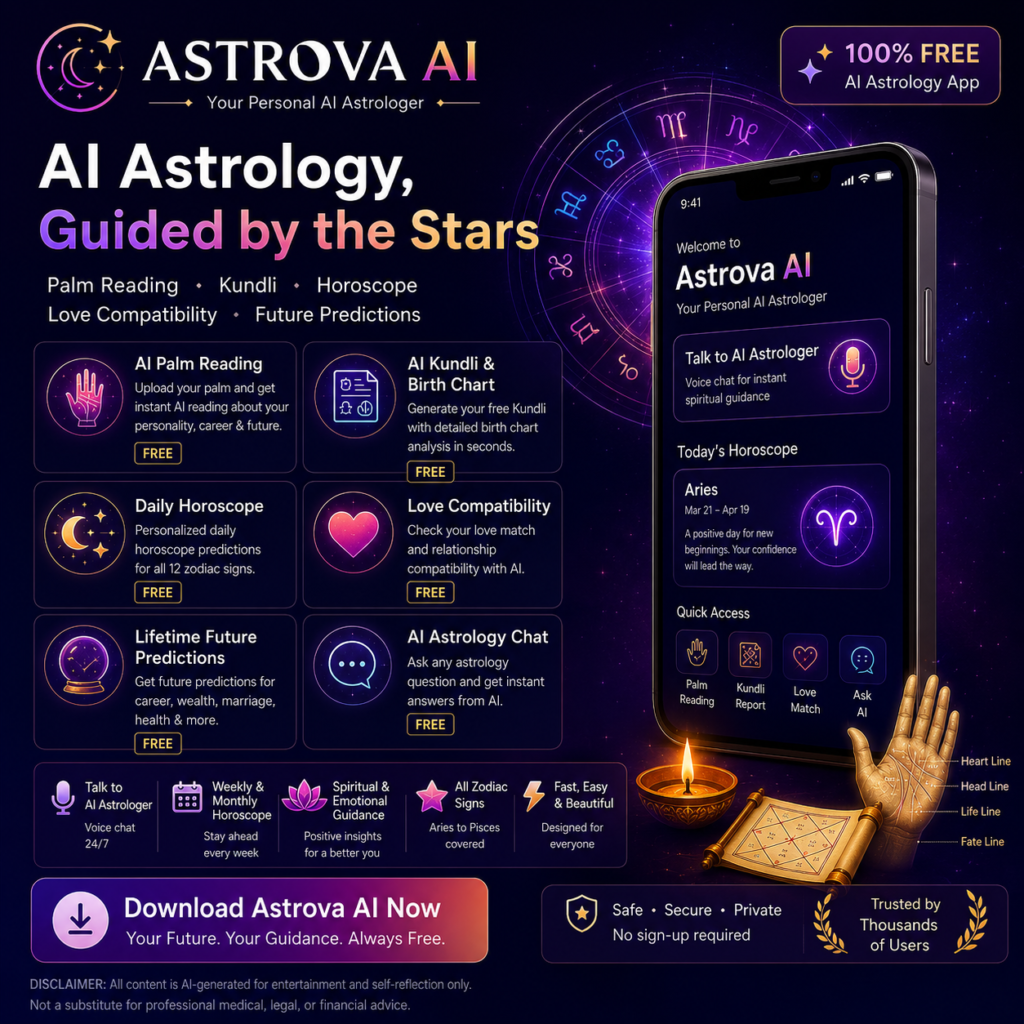
Many smartphone apps now bill themselves as AI astrologers (e.g. Astrova AI, AstroNidan, etc.), promising everything from instant palm and birth-chart readings to daily horoscopes and compatibility reports. Astrova, for instance, advertises free AI palm readings and Kundli (Vedic chart) analysis that interpret your life and future “no astrologer visit needed”. In practice these apps guide you to take a clear palm photo and enter your birth details, then run their algorithms to produce a narrative report. However, even the developers admit the limitations: Astrova’s documentation explicitly notes that palmistry has “no scientific basis” and that its AI-generated insights are purely for “entertainment and self-reflection only”. In short, the apps promise personalised predictions, but with clear disclaimers that their readings are “unverified predictions” and should not be taken as factual life advice.
- No scientific validation: Decades of research find astrology (and by extension AI astrology) lacks predictive power. In a classic meta-analysis, Crowe (1990) concluded astrologers could not predict personality “more accurately than by simple chance”. Similarly, a 2024 controlled study had 152 professional Western astrologers try to match people to their correct birth charts; their success rate was indistinguishable from random guessing. Even modern machine-learning tests confirm this: a recent study trained AI models on zodiac signs and personality traits and found “predictive performance remains at or near random expectation,” concluding that zodiac-based systems give no reliable predictive information. In other words, neither human nor AI astrologers have demonstrated better-than-chance accuracy in objective tests.
- AI hype vs. reality: Proponents of AI astrology point out that computers can compute complex charts faster, but this doesn’t solve the core problem – the astrological principles themselves are not scientifically grounded. Promotional materials for some AI astrology services claim their engines match senior human astrologers on structured questions, but these claims come from the companies themselves without independent proof. On the other hand, generic chatbots like ChatGPT often give only very generalized horoscopes: one professional astrologer noted that users find AI-generated advice “pretty general, not truly tailored” to their lives. Some clients report ChatGPT even gives alarmist or factually incorrect statements (a “fatalistic, fear-mongering response” or outright inaccurate concepts) that real astrologers then have to correct. In short, AI systems can ensure consistency and speed, but they typically output the same vague, Barnum-type statements that have long been associated with horoscope columns.
- User trust and satisfaction: Independent user studies echo this skepticism. A 2026 survey of astrology-app users found “significant doubt about the accuracy and reliability” of the apps’ predictions, and overall satisfaction was low. Most respondents admitted they used the apps mainly for entertainment or out of curiosity – they didn’t fully trust the guidance. These findings align with the well-known psychological effects (e.g. the Barnum or Forer effect) that make people believe generic personality statements. In practice, users often view AI horoscopes as a fun convenience rather than hard insight.
Taken together, all the evidence suggests AI astrologers are not scientifically accurate. No peer-reviewed study shows any AI system making better predictions than chance. Even one sensational paper that claimed 99% accuracy in forecasting stock movements by combining astrological data with machine learning was met with skepticism – as one commentator quipped, “if a system promises easy money, it won’t be shared”. In other words, extraordinary accuracy claims should be viewed with extreme caution.
Conclusion: Until there is rigorous, independent validation, AI-based horoscopes and palm readings should be regarded as entertainment or personal reflection tools – not factual guides. Both developers and researchers emphasize this: Astrova’s privacy policy stresses its output is purely AI-generated entertainment, and satisfied users report they value it as a novel experience, not a destiny blueprint. If you enjoy astrology, AI apps can be a fast and convenient way to explore charts and horoscopes. But the accuracy of their predictions remains essentially unproven and likely no better than traditional astrology. As one study suggests, use these tools with a light touch – treating them as fun personalization rather than reliable forecasting.
Sources: Research and reviews of astrology (Crowe 1990; ClearerThinking 2024; Sundar Samantaray et al. 2026), user studies of astrology apps, plus documentation from AI astrology apps like Astrova and media reports (Teen Vogue, Boing Boing) on AI horoscope use. These collectively show no evidence that AI astrologers offer truly accurate or reliable predictions.