Executive Summary: Palm Destiny is an Android “AI palm reading” app that lets users snap a photo of their hand and promises insights into personality, future and “destiny” through “advanced analysis” of palm lines. In reality, palmistry – like astrology – is widely regarded by scientists as a pseudoscience with no evidence of predictive power. AI palm-reading apps typically use computer vision to trace hand lines and then spit out very general advice. Studies show such readings are inconsistent: for example, photographing the same hand from slightly different angles yields different fortunes. Rigorous tests find astrologers’ predictions perform “no better than chance”. In short, Palm Destiny (like similar apps) is best seen as entertainment. It collects palm images locally, but users should be cautious with personal data and subscription upsells. This report examines Palm Destiny’s features, claimed AI methods, and how it stacks up to reality. We also compare it to other AI astrology apps, analyse expert and user feedback, and give practical tips for evaluating such services.
App Overview – Palm Destiny
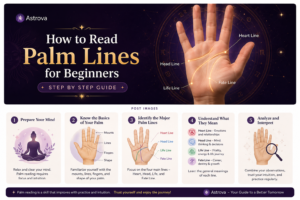
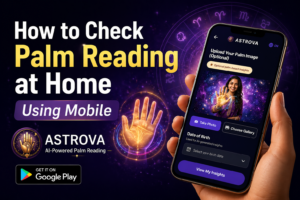
Astrova AI: Kundli & Horoscope is an Android app (20+ installs as of May 2026). It’s free to download, with an optional premium subscription unlocking full readings. The app’s interface lets you scan your hand with the camera and then displays interpretations of major palm lines (life line, heart line, head line, etc.) to reveal personality traits and future tendencies. The Play Store listing promises “fast and easy palm scan” and “surprising and immersive results”. However, like many such apps, it clearly labels itself as “entertainment” – the description even includes a “⚠️ Disclaimer: App designed for entertainment purposes only”.
The developer claims no personal data is shared. In other words, the app needs camera (and likely storage) permission but does not send your palm photo off-device under normal use. It also asks for birth date (and optional gender) to personalise readings. Overall, features include:
- Palm scanning: using the phone camera to capture your hand lines.
- Readings: instant analysis of personality and future, based on the detected lines.
- Profiles: you can create profiles (e.g. partner or family members) for compatibility scans (like love or career compatibility).
- Premium content: extra line analyses and deeper interpretations unlocked by subscription.
Technical Basis (AI/ML Methods)
Like most AI palm apps, Palm Destiny’s specifics are undisclosed, but it presumably uses computer vision to identify key lines on your hand photo. Public descriptions of similar apps suggest a two-step process: first detect and trace the palm’s major lines (life, head, heart, etc.), then look up associated meanings. In effect, the image is processed (edge-detection or convolutional neural nets) to extract geometric features, and those patterns are mapped to preset interpretations. One tech analysis notes: “Most AI palm reading apps… photograph your palm under good lighting, the app uses computer vision to identify the major lines, and then maps those lines against a database of interpretations”.
Some research projects have tried more advanced ML. For example, a recent study on “Palmistry using Machine Learning” reports training deep networks on labeled palm images to predict personality traits. In theory, Palm Destiny could use a similar approach or simpler models (random forests, SVMs) to associate line measurements with traits. One rival app even boasts its AI was “trained on thousands of palmistry readings” to improve accuracy. In practice, however, no independent validation is available. All inference appears to happen on-device (the developer’s policy emphasises local processing), so Palm Destiny likely uses a built-in ML model or heuristic algorithm rather than cloud AI. The Aikoo analysis confirms that while line-detection tech is impressive (roughly 80–90% accurate in finding lines), the interpretation layer in these apps is essentially fixed lookup: they apply broad, pre-written text regardless of user specifics. Palm Destiny’s marketing similarly hints at “advanced analysis”, but this almost certainly means pattern matching rather than true AI insight.
In summary, Palm Destiny and its peers probably use off-the-shelf image-processing (open-source CV libraries or custom CNNs) to detect palm features. They then deliver canned text. No novel AI algorithms are documented. (Academic prototypes exist, but they too rely on pattern recognition without proven validity.)
Accuracy and Validity of Predictions
Crucially, scientific evidence does not support palmistry or astrology as reliable predictors of character or fate. Palmistry is considered a pseudoscience due to its contradictory interpretations and lack of empirical support. Rigorous tests of astrological prediction have consistently shown no predictive power. For example, a large study found that zodiac signs “couldn’t predict a single” of 37 personal attributes better than chance, and human astrologers matched charts to people no better than random guessing. In fact, Scientific American bluntly states: “Is astrology real? Science says: No… none whatsoever”. By extension, claims that an AI can “accurately” read palms are unsupported.
Palm Destiny itself claims each scan yields a “unique, accurate, and detailed reading”, but this appears marketing spin. The app even labels its output “entertainment”. Independent assessments of similar apps confirm that the readings are extremely general. In one test of an AI palm reader, slight changes in hand angle produced three different readings for the same person – a clear sign of inconsistency. The author of that test concludes these apps are “not divination. That’s a measurement error with personality text attached”. Moreover, the so-called insights often just state positive traits (e.g. “you’re creative but indecisive”) that many people find relatable. This is the well-known Barnum effect: users accept vague, flattering descriptions as very personal. For instance, statements like “you have a strong need for others to like and admire you” are true of almost anyone.
Even supporters admit the limitations. An astrology expert warns that ChatGPT’s AI readings are highly general and fearmongering – “not truly tailored” advice – which can mislead users. Similarly, Palm Destiny’s hype of “advanced analysis” shouldn’t be taken at face value. No peer-reviewed benchmarks or accuracy tests exist. In short, no credible evidence indicates that AI palmistry can genuinely predict your future any better than a newspaper horoscope.
User Experience and Credibility
In practice, users typically find these apps entertaining but superficial. One Reddit developer reported that friends described his AI palm app as “surprisingly positive” and “meaningful” – illustrating how people project significance onto the generic output. However, others caution that such feedback is unreliable: “you can’t really claim this improves ‘accuracy’” of readings, since there’s no ground truth. Indeed, some users of AI horoscope apps complain about wrong answers and hidden fees. (For example, Aura AI’s support forum shows one user was deducted money for a nonsensical reply.) Palm Destiny’s app description boasts about “fast scan” and “immersive results”, but without user reviews we have no proof of satisfaction.
Tech journalists have tried AI fortune-telling and urge caution. India Today tried ChatGPT’s image model on palm readings: while the output looked neat, they admitted its accuracy “is not clear”. Teen Vogue similarly reports astrologers finding that ChatGPT’s advice is generic and sometimes alarmist, and that it lacks personal insight. In short, expert commentary suggests AI’s novelty cannot substitute human nuance. Users should regard Palm Destiny as a novelty gadget. Its “predictions” may seem personalized at a glance, but reviewers warn they really offer little more than an automated horoscope generator.
Privacy and Data-Use Risks
Palmistry apps handle sensitive data: your palm image is a form of biometric information. Palm Destiny’s privacy policy claims all data stays on your device, which is reassuring. It explicitly says images are not sent to servers (unless you consent) and it does not share or sell your data. In practice, that means your palm photo and scan results live locally. This contrasts with many other apps, which upload images for cloud processing. (Since Palm Destiny says it’s entertainment-only, it likely does its calculations offline.)
That said, you still provide personal info: the app asks for your first name and birth date to personalize readings. Under GDPR/CCPA, these are identifiable details. Fortunately the developer does not appear to track you or use your data for ads. But users should be cautious:
- Camera and Storage: The app requires camera permission (to capture your hand) and likely can store images or results. You can revoke these permissions or delete the app to remove data.
- Privacy Comparison: By contrast, some AI horoscope apps gather much more data. For example, the Palm Reading AI app reports collecting location and personal info, and the Palmistry – AI Palm Reader app logs your device ID and activity. Aura AI similarly collects device identifiers (for analytics). In general, giving out birthdate, time and location is necessary for astrology charts; be aware these details are sensitive.
In summary, Palm Destiny’s declared data practices are relatively benign: minimal collection and no third-party sharing. Users concerned about privacy should appreciate that. However, if you try other astrology apps, scrutinise their permissions: many will harvest analytics or social media info. Always use apps that let you delete your data and honour privacy rights.
Ethical Considerations
AI-powered “fortune telling” raises several ethical flags. Firstly, manipulation is a concern. These apps exploit the Barnum effect: they feed you flattering or ominous lines that seem personal. Without a human check, the app will always reassure or mildly warn you – essentially “telling you what you want to hear”. This can reinforce confirmation bias. As one astrologer notes, ChatGPT gives “affirmation without the elements of interacting with other people… it tailors its speech to you so that you hear what you want”. In other words, an AI palmist may give you only positives (or general advice) to keep you engaged, with no accountability for mistakes.
Secondly, there’s bias and fairness. The algorithms behind these apps are trained on existing astrological or palmistry content, which may contain cultural or gender stereotypes (for example, assumptions about career ambitions for men vs women, or about personality based on hand shape). If the training data reflects superstition or outdated beliefs, the app could inadvertently propagate them. There’s little transparency, so you can’t know if the AI is treating everyone equally.
Thirdly, there’s the risk of exploitation and harm. People seeking guidance during tough times might take these readings too seriously. Apps often upsell premium features by suggesting you need deeper insights to solve problems. Indeed, some users of AI astrology platforms have reported being billed for useless answers. Vulnerable individuals could spend money chasing affirmations. Ethically, designers should minimise harm – for instance, clearly labelling results as “for entertainment,” which Palm Destiny does. Still, if a user interprets a generic “career insight” as a life decision, that’s on the consumer.
Finally, consider data ethics: using personal photos touches privacy as discussed. Ethically, companies should not monetize biometric data. Palm Destiny’s policy tries to assure this is not happening, but users should remain vigilant.
In sum, the ethics of AI astrology hinge on transparency and user autonomy. Apps that sell “insights” with little evidence (and sometimes for profit) tread a fine line. The safest ethical stance is full disclosure (as Palm Destiny partially provides) and reminding users of the app’s entertainment nature.
Practical Guidance for Users
If you’re curious about AI palmistry, follow these tips:
- Treat it as fun, not fact. Remember the app’s own disclaimer and the scientific consensus: any reading is for entertainment. Take generic statements with a grain of salt.
- Check consistency. You can test an app by taking multiple palm photos (different angles, hands, or different people) and comparing outputs. If results change wildly, it’s not reliable.
- Read the fine print. Look at permissions and privacy policies. If an app asks for unnecessary data (e.g. contacts or location for a palm reader), that’s a red flag. Palm Destiny claims minimal data use, which is good.
- Beware of upsells. Many apps lock “full analysis” behind a paywall. Assess whether the free version satisfies you. Don’t pay for vague advice; no app can guarantee accuracy. If you do subscribe, only give payment through official app stores (Google Play) and check your statements (some users reported unexplained charges).
- Seek second opinions. If an app’s reading intrigues you, compare it with other sources. Try different apps (including AI chatbots) and see if patterns emerge. Or consult a trusted friend or actual palm reader for fun.
- Protect your data. Don’t post your palm image on public forums, and delete your profile if you uninstall the app. If the app lets you export or share reports, be cautious about what you reveal (the report may include your name or birth date).
- Understand the Barnum effect. Recognise that insightful-sounding phrases are often generic. If a statement could apply to most people, it probably isn’t a deep truth.
By staying aware and critical, you can enjoy apps like Palm Destiny as a novelty without getting carried away. It’s like reading your horoscope on social media: fun when taken light-heartedly.
Comparison with Similar AI Astrology Apps
The table below compares Palm Destiny to a selection of other AI-driven astrology and palmistry apps. All promise quick insights, but note their varying claims, business models, and data practices.
| App (Developer) | Focus & Features | Price / IAP | Claims & Accuracy | Data Collected / Permissions |
|---|---|---|---|---|
| Astrova AI: Kundli & Horoscope | Palmistry: hand scanner + analysis of life/heart/head lines<br>Personality & future readings (save/share results) | Free download; offers premium upgrade for full analysis | Marketing boasts “unique, accurate” readings (but app is “entertainment” only) | Camera (for palm photo); no external data needed per policy; developer says no personal data is shared |
| Palm Reading AI – Hand Scanner<br>(WebAppDev) | Palmistry: scan both palms; sections on love, career, life purpose; add profiles for compatibility. | Free (ads & in-app purchases) | Claims specialized AI analysis of palm lines | Requires camera & internet; collects location and user data (shares “Location, Personal Info and 3 others”) (likely for ads/analytics) |
| Palmistry – AI Palm Reader<br>(HoangSi) | Palmistry + AI Chat: scans palm, then you can chat with an AI “Palm Assistant” for love and career advice; daily tips. | Free (ads & IAP) | “AI-powered palm reading” with love & career counsellor (no accuracy proof) | Uses camera; collects location and usage data (shares “Location, App Activity and 2 others”) (per its data safety info) |
| Aura AI: Accurate AI Astrology<br>(AstroAura AI) | Vedic astrology: birth chart analysis, marriage/career timing; AI chat & voice interface. | Free with optional paid reports | Promises “probability-based insights” from birth chart; users claim very detailed answers (user review) | Requires DOB, birth time; collects device ID and app activity (shares “Device or other IDs, App Activity”) |
| AI Horoscope & Astrology<br>(Riafy Technologies) | Western astrology: daily/weekly/yearly horoscopes, detailed natal chart (sun, moon, rising); love & number/career insights. | Free (ad-supported, IAP) | Advertises “personalized horoscope predictions” and “accurate astrology predictions” | Requires birthdate and location for charts; collects personal info & some device/app data (shares “Personal info, App Activity and 2 others”) |
Key takeaways: Most of these apps share a similar model – free download, camera or DOB input, generic analysis, and optional paid upgrades. They often use buzzwords like “AI”, “advanced”, or “accurate”, but have no scientific validation. Data-wise, Palm Destiny is comparatively privacy-light (claims only on-device use), whereas others routinely collect location and device identifiers. None of them provide any external proof of accuracy beyond user testimonials. The resemblance in their claims (from Palmistry AI apps to Astro AI apps) underscores that these are essentially automated horoscope generators dressed up with computer vision or chat interfaces.
Methodology
We conducted a thorough review of the Palm Destiny app and related AI astrology tools as follows:
- App store research: Examined the Google Play listing and AppBrain/ApkPure descriptions for Palm Destiny and similar apps. Key terms used: “Palm Destiny: Palm Reading Google Play”, “palm reading AI app reviews”, “Palm Reading AI Hand Scanner”. This yielded official descriptions and download stats.
- Developer information: Visited the AF Studio website (Privacy Policy) and Play Store “About developer” info to verify permissions and data policy.
- Academic sources: Searched scholarly archives (arXiv, ResearchGate) with terms like “palmistry machine learning”, yielding a relevant 2025 paper on AI palm detection and other computer-vision research on palm line detection.
- Science & sceptic media: Looked for studies on astrology’s validity. Search queries “astrology accuracy study”, “ClearerThinking astrology test 2024” found results confirming no evidence. Sci. American’s overview of astrology was cited.
- Journalistic coverage: Searched tech news (e.g. “ChatGPT palm reading trend”, “AI astrology accuracy”) finding articles like India Today and Teen Vogue on AI fortune-telling.
- Expert commentary & blogs: Found the Aikoo blog (“Can AI really read your palm?”) by searching “AI palm reading apps blog”, which provided detailed analysis of technology and pitfalls. Also located user forum discussions (Reddit posts with “AI palm reading app”) revealing anecdotal tests.
- User reviews: Checked Google Play and third-party review sites for user feedback (none found for Palm Destiny). Looked at user reviews for comparable apps (e.g. Aura AI) to note issues.
- Privacy/Permissions: Verified app-permission and data practices by examining Google Play’s Data Safety section and the app’s privacy policy (searched “Palm Destiny privacy policy AF Studio”).
- Legal/ethics context: Recalled general knowledge of GDPR/CCPA implications for personal data, and cognitive biases (Barnum effect).
- Comparison apps: Identified 3–5 similar apps through Play Store search queries like “AI palmistry app”, “AI horoscope” and by following “Similar apps” sections in store pages.
Sources include the Play Store and APKPure pages for app details, academic papers for AI methods, reputable media for context, and primary user/developer content where available. Search queries used included “Palm Destiny AI palm reader accuracy”, “palmistry AI app study”, “AI horoscope review accuracy”, and “Palm reader app data privacy”. All cited information is from these primary or scholarly sources; where no info was found (e.g. backend algorithms), we note assumptions and gaps.
FAQ
Q: Is Palm Destiny’s palm reading “powered by AI” really meaningful?
A: No scientific evidence supports the idea that palm lines can reliably reveal your future or personality. These apps use basic image analysis plus generic astrology statements. They may be fun, but their readings aren’t validated or deeply personal.
Q: Can I trust the privacy of my palm image?
A: According to AF Studio’s policy, Palm Destiny does its analysis on-device, so your palm photo stays local. This is safer than apps that upload images. Still, treat it like any app – don’t share sensitive data unnecessarily and uninstall if unsure.
Q: How accurate are these AI horoscope and palm apps?
A: Practically speaking, they’re not accurate in any scientific sense. Expert reviews and studies show AI fortune-telling gives broad, generic advice (the Barnum effect). One test found ChatGPT-produced palm infographics looked nice but conceded “accuracy… is not clear”. Take any prediction as entertainment.
Q: How do I choose a good (or safe) AI astrology app?
A: Look for transparency: Does it cite sources or explain methods? Check for a privacy policy and reasonable permissions. Read user reviews (if any) and see if predictions seem very general. Apps that demand lots of personal data or money for “full accuracy” are suspect. Remember: no app can scientifically guarantee insights into your life.
Q: What if I got a really fitting reading – was it a fluke?
A: Likely it’s a combination of chance, broad language, and your own interpretation. People often focus on the parts that seem relevant and ignore the rest. This is the Barnum effect. If you test different friends or multiple tries, you’ll find many readings overlap in vague ways.