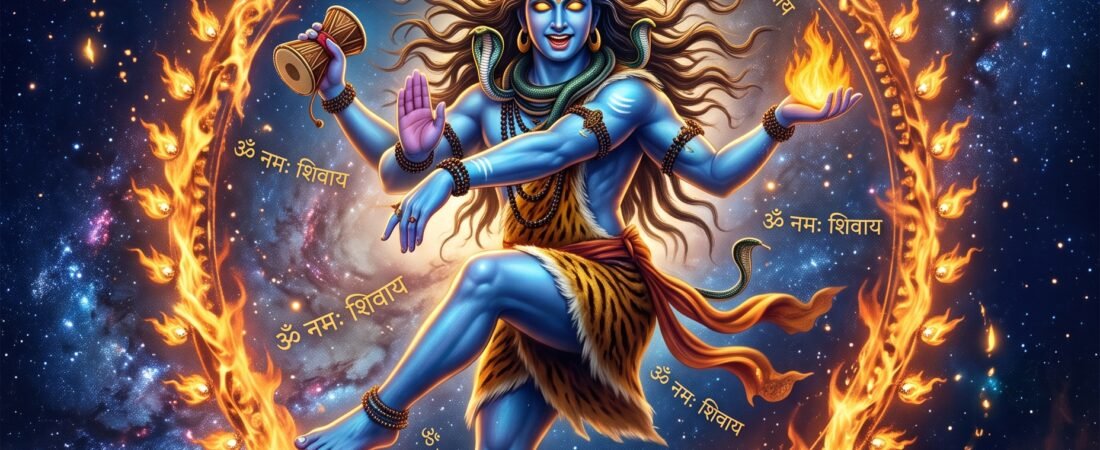
In Hindu cosmology, the universe is not a machine—it is a dance. At the centre of that cosmic dance stands Lord Shiva, performing the Ananda Tandava, the dance of bliss. Every movement of his body sets the planets in motion, shapes the destinies of beings, and governs the rhythm of time itself.
This is not merely mythology. The connection between Shiva and the Navagraha (the nine celestial bodies) is one of the most profound frameworks in Vedic astrology—one that ancient rishis used to understand karma, timing, and spiritual liberation.
In this guide, we explore how Shiva’s cosmic dance governs the nine planets, what each planetary deity represents, and how you can use this wisdom in your daily spiritual practice.
What Is the Navagraha and Why Does It Matter?
The Navagraha (literally “nine graspers”) are the nine celestial bodies that Vedic astrology says “grasp” or influence human destiny:
- Surya (Sun) — Soul, authority, father, vitality
- Chandra (Moon) — Mind, emotions, mother, nourishment
- Mangala (Mars) — Courage, aggression, siblings, property
- Budha (Mercury) — Intelligence, communication, business
- Guru/Brihaspati (Jupiter) — Wisdom, expansion, guru, children
- Shukra (Venus) — Love, beauty, arts, luxury
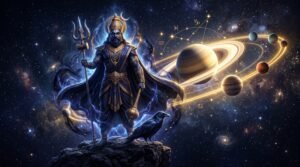
- Shani (Saturn) — Discipline, karma, longevity, service
- Rahu (North Lunar Node) — Obsession, foreign lands, sudden events
- Ketu (South Lunar Node) — Detachment, spirituality, past lives
Each of these is not merely a physical object in space. In the Vedic worldview, each Graha is a living deity with consciousness, who carries out the karmic blueprint of every soul.
Shiva as the Master of the Navagraha
Here is where the story becomes extraordinary.
In Shaiva tradition, Shiva is the supreme lord of all nine planets. The Navagrahas do not operate independently—they dance to Shiva’s rhythm. This is why Shiva is often depicted in the Nataraja form, encircled by the Prabha Mandala (the cosmic fire ring), which symbolically represents the orbital paths of the planets.
The Shiva Purana and the Linga Purana both describe how the gods approached Shiva to grant them the power to influence human karma. Shiva assigned each planet its domain and instructed them to deliver the fruits of karma—neither more nor less than what a soul has earned.
“I am the dancer, and the planets are my rhythm. What they give, I have ordained. What they take, I have designed. Worship them with reverence, and they shall dance in your favour.”
— Paraphrase from Shiva Purana, Rudra Samhita
The Story: How Each Planet Got Its Power from Shiva
Ancient texts describe a fascinating narrative of how each Navagraha received its authority. Here is a condensed version of the most widely told tradition:
Surya (Sun) — The Soul’s Lamp
Surya, the Sun god, was given dominion over the soul (Atman), authority, and vitality by Shiva. Surya’s wife Sanjna could not bear his radiance, and she created a shadow-clone (Chhaya) to take her place. When Surya discovered this, his grief became the karmic engine that shaped the destinies of his children—including Shani, Yama (god of death), and the river goddesses.
Shani (Saturn) — The Karma Deliverer
Shani, born to Surya and Chhaya, was cursed with a dark complexion and a limp. He performed intense penance to Shiva, who granted him the power to deliver the fruits of karma—making Shani the most feared and most misunderstood of all planets. Shiva told him: “You shall be the judge, not the punisher. Those who have done right shall find you a friend.”
Rahu and Ketu — The Cosmic Nodes
During the Samudra Manthan (churning of the ocean), the demon Swarbhanu disguised himself as a god to drink the nectar of immortality. Vishnu, in the form of Mohini, severed his head. But the nectar had already touched his throat. His head became Rahu (obsession, desire) and his body became Ketu (detachment, liberation). Shiva assigned them their roles as the eclipsers—the forces that periodically swallow the Sun and Moon, reminding us that desire and detachment are eternal cosmic forces.
The Remaining Planets
Each of the remaining planets—Chandra, Mangala, Budha, Guru, and Shukra—received their domains through similar narratives of devotion, curse, and divine grace. Together, they form a cosmic council that administers karma under Shiva’s supreme authority.
The Astrological Significance: What This Means for You
Understanding that Shiva governs the Navagraha is not just theological knowledge—it has practical astrological implications:
1. Planetary Remedies Work Through Shiva’s Grace
When you perform a Shani Shanti Puja or chant the Navagraha Mantra, you are not merely appeasing a planet. You are invoking Shiva’s authority over that planetary force. This is why Shiva worship is considered the highest planetary remedy in Vedic astrology.
2. Sade Sati and Dhaiya Are Not Punishments
When Shani’s Sade Sati (7.5-year cycle) or Dhaiya (2.5-year cycle) strikes, it is not punishment—it is Shiva’s mechanism for delivering karma. Understanding this transforms fear into acceptance and spiritual practice.
3. The Tandava Reveals Your Dasha Period
The Vedic Dasha system (planetary periods) is essentially a map of which planet is “dancing” most prominently in your life at any given time. When you understand the Tandava, you understand why certain periods bring expansion (Jupiter Dasha) and others bring contraction (Saturn Dasha).
Practical Spiritual Practices Aligned with the Navagraha
Here are time-tested practices that connect you with the planetary deities through Shiva’s framework:
Daily Navagraha Mantra (2 Minutes)
Chant this simple invocation each morning to align with all nine planetary forces:
“Om Suryaya Chandraya Mangalaya Budhaya cha,
Gurave Shukra Shanibhyascha Rahave Ketave Namah.
Om Namah Shivaya.”
This mantra names all nine Grahas and closes with Shiva’s name—acknowledging that the planets operate under his authority.
Day-by-Day Devotion
Each day of the week is governed by a specific planet. Aligning your practice with the weekday deity amplifies its positive influence:
- Monday (Somwar) — Chandra/Moon — Fast or offer white flowers to Shiva
- Tuesday (Mangalwar) — Mangala/Mars — Recite Hanuman Chalisa
- Wednesday (Budhwar) — Budha/Mercury — Wear green, study sacred texts
- Thursday (Guruwar) — Guru/Jupiter — Honour your guru, wear yellow
- Friday (Shukrawar) — Shukra/Venus — Practice gratitude, wear white
- Saturday (Shaniwar) — Shani/Saturn — Light a sesame oil lamp for Shani
- Sunday (Ravivar) — Surya/Sun — Offer water to the rising Sun (Arghya)
Shiva Linga Abhishekam for Planetary Peace
One of the most powerful remedies for all nine planetary afflictions is the Rudra Abhishekam—bathing the Shiva Linga with milk, water, honey, and bilva leaves while chanting the Maha Mrityunjaya Mantra. This practice is said to pacify all malefic planetary influences simultaneously, because Shiva is their supreme lord.
Reference Table: Navagraha Deities, Domains, and Remedies
| Planet | Deity | Governs | Day | Colour | Key Remedy |
|---|---|---|---|---|---|
| Sun (Surya) | Surya Dev | Soul, authority, health | Sunday | Gold/Orange | Aditya Hridayam |
| Moon (Chandra) | Soma/Chandra | Mind, emotions, mother | Monday | White/Silver | Chandra Mantra |
| Mars (Mangala) | Angaraka | Courage, property, siblings | Tuesday | Red | Hanuman Chalisa |
| Mercury (Budha) | Budha Dev | Intelligence, speech, trade | Wednesday | Green | Vishnu Sahasranama |
| Jupiter (Guru) | Brihaspati | Wisdom, expansion, guru | Thursday | Yellow | Guru Stotram |
| Venus (Shukra) | Shukracharya | Love, arts, luxury | Friday | White/Pink | Shukra Mantra |
| Saturn (Shani) | Shani Dev | Karma, discipline, longevity | Saturday | Black/Dark Blue | Shani Chalisa |
| Rahu | Swarbhanu (head) | Obsession, foreign, sudden | Saturday* | Smoky/Grey | Rahu Mantra + Durga |
| Ketu | Swarbhanu (body) | Detachment, moksha, past | Tuesday* | Multi/Transparent | Ketu Mantra + Ganesha |
*Rahu and Ketu share Saturday and Tuesday respectively in many traditions.
What Modern Astrology Gets Wrong About the Navagraha
Modern Western astrology treats planets as psychological archetypes—useful for self-reflection but stripped of divine agency. Vedic astrology, by contrast, treats them as conscious beings who actively administer karma.
This is not a minor difference. It changes everything about how you approach a difficult planetary period. If Saturn is merely an archetype, then Sade Sati is a psychological challenge to “reframe.” If Saturn is Shani Dev, a conscious deity executing Shiva’s karmic design, then Sade Sati is a sacred period of karmic purification that demands spiritual practice, not just positive thinking.
This is why the most effective astrologers in the Vedic tradition combine remedial worship with predictive analysis—they understand that the planets respond to devotion.
How Astrova AI Helps You Understand Your Planetary Story
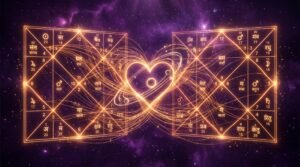
Understanding the Navagraha is the first step. Understanding your Navagraha—which planets are strong in your chart, which are afflicted, which Dasha you are running—is where personal transformation begins.
Astrova AI makes this accessible to everyone:
- 🔮 Janam Kundli — Generate your complete birth chart with planetary positions in seconds
- 🌙 Daily Rashifal — Get personalized horoscope readings based on your Moon sign
- 💫 Kundli Milan — Check compatibility with your partner using Ashtakoot Guna Milan
- ⚡ Sade Sati & Kaalsarp Analysis — Understand your current planetary cycles
- 🤖 24/7 AI Astrologer — Ask any astrology question and get instant, personalized answers
- 🗣️ Available in 9 Indian Languages — Hindi, Tamil, Telugu, Kannada, Malayalam, Marathi, Gujarati, Bengali, and English
🙏 Download Astrova AI – 100% Free
Frequently Asked Questions
Is Shiva really above the Navagraha?
Yes. In Shaiva Siddhanta and most Puranic traditions, Shiva is Mahadeva—the great god above all planetary deities. The Navagrahas execute karma; Shiva transcends karma. This is why worshipping Shiva is considered the ultimate remedy for all planetary afflictions.
Can worshipping Shiva cancel bad planetary effects?
Vedic tradition holds that Shiva’s grace can mitigate the intensity of malefic planetary periods, but cannot erase karma entirely. The planets deliver what is owed—but devotion can transform the experience from suffering into growth.
Which is more important: planetary remedies or Shiva worship?
They are complementary, not competing. Planetary remedies (mantras, gems, fasting) address specific afflictions. Shiva worship addresses the root—your relationship with the cosmic order itself. Most traditional astrologers recommend both.
What is the best day to start Navagraha practice?
Traditionally, Monday (Shiva’s day, governed by the Moon) or Thursday (Jupiter’s day, the guru planet) are considered most auspicious for beginning planetary spiritual practice. However, sincere devotion on any day is accepted.
Does Astrova AI provide Navagraha remedies?
Yes. Astrova AI’s Kundli analysis identifies which planets are strong or weak in your chart, and the 24/7 AI Astrologer can suggest personalized remedies including mantras, fasting days, and charitable acts aligned with your specific planetary configuration.
Summary: The Dance That Shapes Your Destiny
The Navagraha are not distant astronomical objects—they are conscious forces, dancing to Shiva’s rhythm, delivering the fruits of your karma with perfect precision. When you understand this, astrology stops being fortune-telling and becomes a map of your spiritual journey.
Whether you are running through a challenging Saturn period or riding the wave of Jupiter’s grace, remember: the dance has a purpose. And the dancer—Mahadeva—is always with you.
Ready to discover what the planets are saying in your life?
✨ Get Your Free Kundli on Astrova AI
Explore More Astrova Guides
- How to Read Your Janam Kundli — Complete Guide to Vedic Birth Charts
- Daily Rashifal Explained — How Vedic Horoscopes Actually Work
- Kundli Milan & Compatibility — The Science Behind Match-Making
- Sade Sati, Kaalsarp & Manglik Dosha — What They Really Mean
- AI Palm Reading — Ancient Wisdom Meets Modern Technology
- AI Astrology — How Artificial Intelligence Is Transforming Vedic Astrology
About the Author: The Astrova AI editorial team combines traditional Vedic astrology scholarship with modern AI technology. Our content is reviewed by experienced Jyotish practitioners and grounded in classical texts including the Brihat Parashara Hora Shastra, Phaladeepika, and Saravali. Astrova AI is available free on Google Play in 9 Indian languages.