What Is Parivartana Yoga in Your Kundli and How Does Planetary Exchange Transform Your Life?
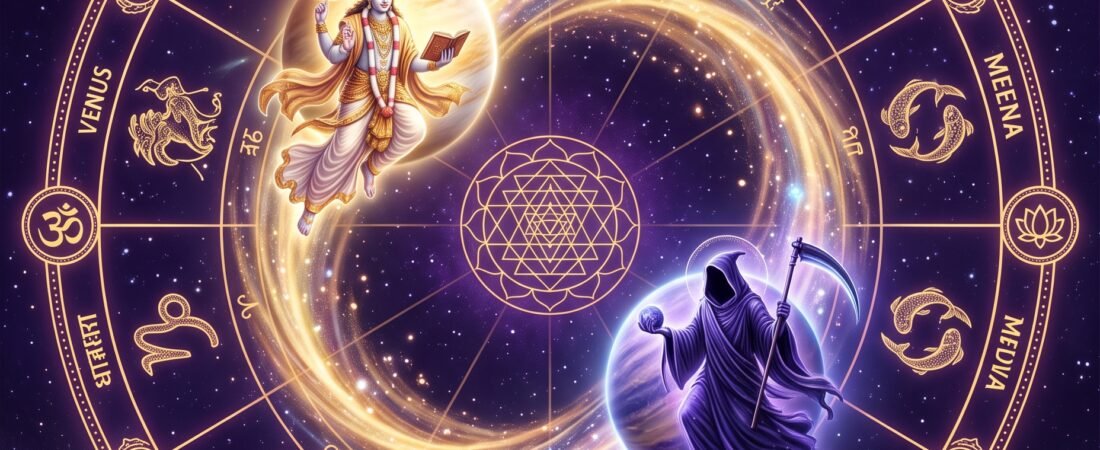
Quick Answer: Parivartana Yoga forms when two planets exchange signs in your birth chart — each planet sits in the sign ruled by the other. This mutual exchange creates a powerful bond that amplifies both planets’ strengths and connects their life areas permanently.
⭐ 100% FREE
Get Your Free Astrova AI Reading
AI Palm Reading • Janam Kundli • Daily Rashifal • 24/7 AI Astrologer
In the intricate web of Vedic astrology, few combinations are as fascinating as Parivartana Yoga — the planetary exchange that creates invisible threads between different areas of your life. When two planets swap signs, they don’t just influence each other; they become partners in shaping your destiny.
The word “Parivartana” means “exchange” or “rotation” in Sanskrit, and that’s exactly what happens: Planet A sits in the sign ruled by Planet B, while Planet B sits in the sign ruled by Planet A. This mutual reception creates a feedback loop of energy that can’t be broken by transits or Dashas.
How Parivartana Yoga Forms
Understanding Parivartana requires knowing which planets rule which signs:
- Mars rules Aries and Scorpio
- Venus rules Taurus and Libra
- Mercury rules Gemini and Virgo
- Moon rules Cancer
- Sun rules Leo
- Jupiter rules Sagittarius and Pisces
- Saturn rules Capricorn and Aquarius
- Rahu co-rules Aquarius (with Saturn)
- Ketu co-rules Scorpio (with Mars)
For a Parivartana to form, Planet A must be in a sign ruled by Planet B, AND Planet B must be in a sign ruled by Planet A. Here are some common examples:
| Planet A | In Sign | Planet B | In Sign | Result |
|---|---|---|---|---|
| Mars | Taurus (Venus’s sign) | Venus | Scorpio (Mars’s sign) | Passion-wealth exchange |
| Moon | Sagittarius (Jupiter’s sign) | Jupiter | Cancer (Moon’s sign) | Emotional-wisdom bond |
| Sun | Libra (Venus’s sign) | Venus | Leo (Sun’s sign) | Ego-relationship balance |
| Saturn | Aries (Mars’s sign) | Mars | Capricorn (Saturn’s sign) | Discipline-action synergy |
The Three Types of Parivartana Yoga
Not all planetary exchanges are equal. Vedic astrology classifies Parivartana into three categories based on the house relationship between the exchanging planets:
1. Maha Parivartana (Great Exchange)
This occurs when the exchanging planets are in Kendra houses (1st, 4th, 7th, 10th) from each other. This is the strongest form, creating lasting success and stability. Example: Mars in the 7th house (Venus’s sign) while Venus is in the 1st house (Aries, Mars’s sign).
2. Kaahala Parivartana (Minor Exchange)
This forms when the planets are in 2nd, 5th, 8th or 11th houses from each other. The results are moderate — they bring gains but require more effort. Example: Moon in the 5th house (Jupiter’s sign) while Jupiter is in the 11th house (Cancer, Moon’s sign).
3. Dainya Parivartana (Difficult Exchange)
This occurs when the planets are in 3rd, 6th, 8th or 12th houses from each other. The exchange creates challenges and internal conflicts, but also opportunities for growth through struggle. Example: Saturn in the 6th house (Mars’s sign) while Mars is in the 8th house (Saturn’s sign).
What Parivartana Yoga Means for Your Life
When two planets exchange signs, they create a permanent connection between the life areas those planets rule. This connection manifests in specific ways:
- Career-Relationship Parivartana: If your 7th lord (partnerships) and 10th lord (career) exchange signs, your professional success becomes deeply tied to your relationships. You may meet your spouse through work, or your partner may significantly influence your career path.
- Wealth-Family Parivartana: If your 2nd lord (wealth) and 4th lord (home/family) exchange signs, your financial security becomes connected to your family. You might build wealth through real estate, family business, or inherit property that generates income.
- Education-Children Parivartana: If your 5th lord (children/education) and 9th lord (higher learning/dharma) exchange signs, your children may become your teachers, or your educational pursuits may be deeply influenced by your children’s needs.
Identifying Parivartana in Your Chart
To find Parivartana Yogas in your birth chart:
- Generate your complete Janam Kundli with accurate birth details. Even small errors in birth time can shift planets into different signs and create or destroy Parivartana.
- List each planet’s sign placement and note which planet rules that sign.
- Check for mutual exchanges — does Planet A sit in Planet B’s sign while Planet B sits in Planet A’s sign?
- Determine the house relationship between the two planets to classify the Parivartana type (Maha, Kaahala or Dainya).
- Assess the strength — are the planets well-placed, aspected by benefics, and running in favorable Dashas?
⭐ 100% FREE
Get Your Free Astrova AI Reading
AI Palm Reading • Janam Kundli • Daily Rashifal • 24/7 AI Astrologer
Real-Life Example: How Parivartana Shapes Life Path
Consider a hypothetical case: A software engineer with Moon in Sagittarius (Jupiter’s sign, 9th house) and Jupiter in Cancer (Moon’s sign, 4th house). This Maha Parivartana connects emotions/home (Moon) with wisdom/teaching (Jupiter). The person finds deep emotional fulfillment through teaching, writing or spiritual pursuits connected to home. They eventually leave corporate tech to run an online astrology school from their home — the Parivartana perfectly manifesting as emotional wisdom expressed through teaching.
This illustrates how Parivartana doesn’t just influence one area of life — it weaves two areas together permanently.
Common Questions About Parivartana Yoga
Is Parivartana always beneficial?
No. The benefit depends on which planets are exchanging and which houses they occupy. A Maha Parivartana between benefics in Kendra houses is highly beneficial. A Dainya Parivartana between malefics in dusthana houses (6th, 8th, 12th) creates challenges that require conscious effort to navigate.
Can Parivartana be cancelled by transits?
No. Unlike other yogas, Parivartana is a permanent structural feature of your birth chart. Transits may temporarily activate or suppress its results, but the connection itself cannot be broken.
What if only one planet is in the other’s sign?
That’s not Parivartana — it’s simply a planet placed in another planet’s sign. For Parivartana, BOTH planets must be in each other’s signs. One-way placement creates a different kind of influence.
Can Rahu-Ketu form Parivartana with other planets?
Yes, but it’s debated among astrologers. Some consider Rahu in Aquarius (Saturn’s sign) with Saturn in Aquarius (also Saturn’s sign, but Rahu co-rules) as a form of Parivartana. Others restrict Parivartana to the seven classical planets. The effects, when accepted, are karmic and transformative.
Explore More Astrova Guides
- AI Palm Reading Complete Guide
- Generate Janam Kundli Online Free
- What Is Sade Sati
- Kundli Milan Compatibility
- AI Astrology Daily Guidance
Frequently Asked Questions
- How rare is Parivartana Yoga? It’s relatively uncommon. In a typical birth chart, you might find zero to two Parivartana Yogas. Charts with three or more are considered specially blessed or karmically complex.
- Does Parivartana work during all Dashas? The Parivartana connection is always active, but its results become most visible during the Dashas of the exchanging planets. If you’re running the Dasha of a planet not involved in the Parivartana, the yoga’s effects may be less prominent.
- Can Parivartana create Raj Yoga? Yes, if the exchanging planets are Kendra and Trikona lords, the Parivartana itself becomes a form of Raj Yoga, bringing success through the connected life areas.
- What remedies strengthen a weak Parivartana? Wearing the gemstones of both exchanging planets (on different fingers/hands), chanting both planets’ mantras, and performing charity related to both planets’ significations can strengthen the exchange.
- How does Parivartana affect marriage compatibility? If both partners have the same Parivartana, they experience the exchange similarly and may attract each other. If one partner’s Parivartana planets aspect the other partner’s ascendant or 7th house, the connection is karmically significant.
About the Astrova AI Editorial Team
The Astrova AI Editorial Team creates practical, research-backed astrology content to help you understand Vedic wisdom and apply it to modern life. Our guides combine traditional Jyotish principles with accessible, actionable insights.
Have a correction or question? We welcome feedback. Reach us at support@theastrova.com
Discover Your Planetary Exchanges
Generate your free Janam Kundli and uncover the hidden Parivartana Yogas shaping your destiny.
Related posts:
 What Does Your Marriage Line on the Palm Reveal About Your Love Life and Relationship Timing?
 What Is Kemadruma Yoga In Your Kundli And Does It Really Cause Poverty?
 What Is Ashtakavarga in Vedic Astrology and How Does This Point System Predict Planetary Strength
 How to Read Your Varshphal (Annual Horoscope) — A Practical Guide to Your Yearly Predictions