📱 Get Daily Rashifal – FREE with Astrova AI
Daily vs Weekly vs Yearly Horoscope: Which Should You Trust?
“I read my daily horoscope every morning. It said ‘avoid financial risks today.’ I ignored it, invested in a stock, and lost money. Now I never skip my rashifal.”
Priya’s story isn’t unique. Every day, millions of people check their horoscope — but most don’t understand the difference between daily, weekly, monthly, and yearly predictions. They read a daily horoscope and expect it to predict their entire year. Or they read a yearly forecast and wonder why it didn’t mention what happened last Tuesday.
Here’s the truth: each timeframe serves a different purpose. Daily horoscopes are for tactical decisions. Weekly horoscopes reveal patterns. Monthly horoscopes show themes. Yearly horoscopes map your life’s big picture.
Understanding which to trust — and when — transforms astrology from vague entertainment into practical guidance.
The Four Horoscope Timeframes Explained
Vedic astrology (and Western astrology) operates on multiple timescales, each revealing different layers of cosmic influence:
Daily Horoscope (Dina Rashifal)
What it covers: The next 24 hours — mood, opportunities, challenges, and optimal actions for that specific day.
Based on: The Moon’s daily transit through zodiac signs, plus the day’s planetary positions relative to your Moon sign.
Best for:
- Deciding whether to schedule an important meeting or postpone it
- Understanding why you feel energized or drained on a particular day
- Timing daily activities (shopping, travel, conversations, health routines)
- Avoiding known unfavorable periods (Rahu Kaal, Gulika Kaal)
Accuracy window: High for immediate, short-term decisions. Low for predicting major life events.
Weekly Horoscope (Saptaha Rashifal)
What it covers: The 7-day period ahead — recurring themes, emotional patterns, and relationship dynamics.
Based on: The Moon’s weekly cycle through all 12 signs (the Moon spends roughly 2.5 days in each sign), plus weekly planetary aspects.
Best for:
- Planning your week’s priorities (which days favor career vs. family vs. self-care)
- Understanding emotional cycles (why you feel moody on certain days)
- Timing relationship conversations (some weeks favor resolution, others favor space)
- Identifying which days to push forward and which to rest
Accuracy window: Medium-term patterns. Good for recognizing trends, less precise for specific events.
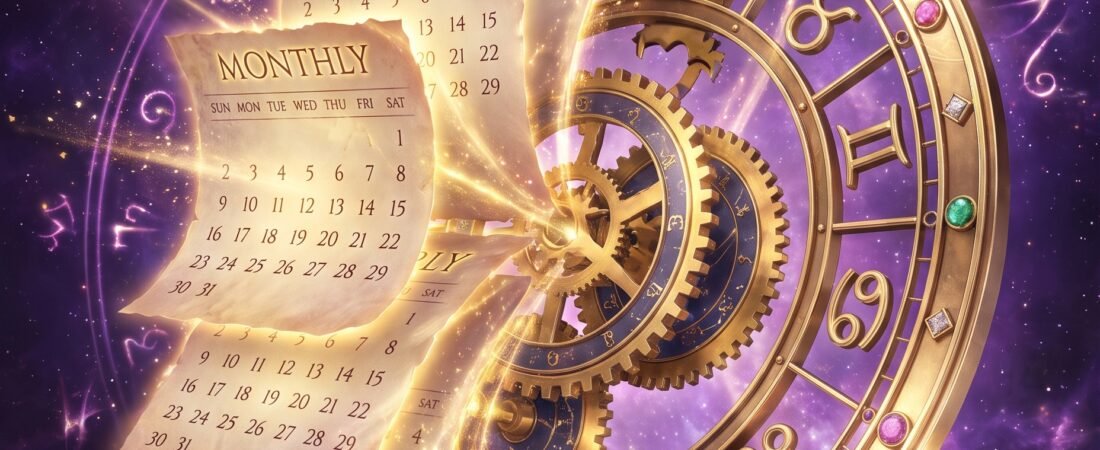
Monthly Horoscope (Masik Rashifal)
What it covers: The month’s overarching themes — major opportunities, challenges, and focus areas.
Based on: The Sun’s transit through signs (the Sun spends roughly 30 days in each sign), plus monthly planetary movements and aspects.
Best for:
- Setting monthly goals aligned with cosmic energy
- Understanding the month’s dominant theme (career growth, relationship focus, health attention)
- Planning major initiatives (launching a business, starting a relationship, beginning a health program)
- Preparing for challenging periods (Saturn transits, eclipse seasons)
Accuracy window: Broad themes and opportunities. Not specific to exact dates.
Yearly Horoscope (Varshaphal)
What it covers: The year’s major life chapters — career shifts, relationship milestones, health patterns, spiritual growth.
Based on: The Solar Return chart (cast for the exact moment of your birthday each year), plus transits of slow-moving planets (Jupiter, Saturn, Rahu, Ketu) through your houses.
Best for:
- Understanding the year’s overarching purpose and lessons
- Planning major life decisions (marriage, career change, relocation, business launch)
- Preparing for Saturn Sade Sati, Jupiter dasha, or other long-term planetary periods
- Identifying which life areas will expand and which will contract
Accuracy window: Long-term trends and karmic patterns. Not useful for daily decisions.
When to Trust Each Timeframe
Not all horoscopes are created equal. Here’s when to trust each:
| Timeframe | Trust Level | Use For | Ignore For |
|---|---|---|---|
| Daily | High for tactical decisions | Scheduling, timing, mood management, avoiding unfavorable periods | Major life decisions, long-term planning, predicting specific events |
| Weekly | Medium for pattern recognition | Weekly planning, emotional preparation, relationship timing | Exact event prediction, career-defining decisions |
| Monthly | Medium for theme identification | Monthly goal-setting, initiative planning, theme awareness | Daily scheduling, precise timing |
| Yearly | High for major life planning | Marriage timing, career shifts, relocation, business launches | Daily decisions, short-term mood management |
The Mistake Most People Make
Here’s the most common astrology mistake: reading a daily horoscope and expecting it to predict your year.
Example: Your daily horoscope says “career challenges ahead.” You panic and think, “Is my job in danger?” But the daily horoscope only means today’s energy favors patience over aggressive career moves. It doesn’t predict job loss.
Conversely, reading a yearly horoscope and expecting it to tell you what to do today is equally wrong. Your yearly forecast might say “career expansion year,” but that doesn’t mean every single day favors career action. Some days within that year will favor rest, reflection, or relationship focus.
Real Case Study: How Understanding Timeframes Saved a Business Launch
Rahul planned to launch his startup on March 15, 2026. He’d been working on it for a year and was ready to go live.
But his monthly horoscope for March said: “Delay major initiatives until after March 20. Mars retrograde creates technical glitches and miscommunication.”
Rahul almost ignored it. “I can’t delay a year of work because of astrology,” he thought.
Then he checked his daily horoscope for March 15. It said: “Avoid signing contracts. Technical errors likely.”
He decided to wait. On March 18, his developer discovered a critical bug that would have crashed the platform on launch day. On March 22, after Mars went direct, Rahul relaunched — and the platform ran smoothly.
“If I’d launched on March 15, I would have lost credibility on day one,” Rahul told me. “Astrology didn’t build my product, but it helped me time the launch perfectly.”
How to Read Your Horoscope Correctly
Most people read horoscopes wrong. Here’s the correct approach:
Step 1: Know your Moon sign, not just your Sun sign.
Vedic astrology (Jyotish) uses the Moon sign for predictions, not the Sun sign. Your Moon sign changes every 2.5 days, so you need your exact birth time to calculate it. Use Astrova AI’s free kundli generator to find your Moon sign in seconds.
Step 2: Read the right timeframe for the right decision.
Planning a meeting next week? Check the weekly horoscope. Making a major life decision? Check the yearly forecast. Just trying to get through today? Check the daily rashifal.
Step 3: Look for patterns, not predictions.
Horoscopes don’t predict specific events (“You’ll meet a tall dark stranger”). They reveal energetic patterns (“Relationship conversations favored this week”). Your job is to recognize the pattern and act accordingly.
Step 4: Combine multiple timeframes for major decisions.
Before a major life decision (marriage, career change, business launch), check all three: yearly (is this the right year?), monthly (is this the right month?), and daily (is this the right day?). When all three align, the timing is optimal.
Why Daily Horoscopes Sometimes Feel Wrong
Ever read your daily horoscope and thought, “This is completely wrong for me today”? Here’s why:
Reason #1: You’re reading Sun sign horoscopes instead of Moon sign.
Most newspapers and apps publish Sun sign horoscopes. But Vedic astrology uses the Moon sign. If your Sun sign is Aries but your Moon sign is Cancer, reading Aries horoscopes will feel off. Always read for your Moon sign.
Reason #2: Free will overrides astrology.
Astrology shows tendencies, not certainties. If your horoscope says “avoid conflicts” but you choose to confront someone anyway, you’ve exercised free will. The horoscope warned you, but you chose differently. That’s not astrology being wrong — it’s you making a conscious choice.
Reason #3: Your birth time is inaccurate.
If your Moon sign is calculated from an incorrect birth time, your horoscope will be for the wrong sign. Even a 15-minute error can shift your Moon sign. Verify your birth time from a hospital record or family member.
Reason #4: You’re experiencing a strong dasha period.
During major planetary periods (dashas), the dasha planet’s influence overrides daily transits. If you’re in Saturn dasha, Saturn’s lessons dominate — even if your daily horoscope says otherwise.
How Astrova AI Makes Horoscope Reading Simple
Most astrology apps give you generic horoscopes that could apply to anyone. Astrova AI’s rashifal is different:
- Personalized to your Moon sign: Not generic Sun sign predictions, but Vedic astrology based on your actual birth chart
- Available in 9 Indian languages: Hindi, Tamil, Telugu, Kannada, Malayalam, Marathi, Gujarati, Bengali, and English
- Multiple timeframes: Daily, weekly, monthly, and yearly rashifal — all in one app
- AI-powered insights: Not just “today is good” or “today is bad,” but specific guidance on what to do and what to avoid
- Completely free: No subscription, no hidden fees, no credit card required
You can check your daily rashifal every morning, plan your week with weekly predictions, set monthly goals with monthly horoscopes, and understand your year with yearly forecasts — all from one app.
📱 Get Personalized Rashifal – FREE with Astrova AI
Frequently Asked Questions
A: Neither is “more accurate” — they serve different purposes. Daily horoscopes are highly accurate for short-term tactical decisions (scheduling, mood management, timing). Yearly horoscopes are highly accurate for long-term trends (career shifts, relationship milestones, major life themes). The mistake is expecting a daily horoscope to predict your year, or a yearly horoscope to tell you what to do today.
A: In Vedic astrology (Jyotish), always read for your Moon sign. The Moon represents your mind, emotions, and subconscious — the part of you that responds to daily cosmic energy. Your Sun sign represents your soul’s purpose, but daily life is governed by the Moon. If you don’t know your Moon sign, generate your free kundli with Astrova AI to find it.
A: Yes, and you should — especially for major decisions. Before a big life choice, check your yearly horoscope (is this the right year?), monthly horoscope (is this the right month?), and daily horoscope (is this the right day?). When all three align favorably, the timing is optimal. When they conflict, proceed with caution.
A: Because they use different systems. Western astrology uses Sun signs and tropical zodiac. Vedic astrology uses Moon signs and sidereal zodiac (which accounts for the precession of equinoxes). The two systems are roughly 24 degrees apart, so your “sign” may differ between systems. Astrova AI uses Vedic astrology (sidereal zodiac, Moon sign-based), which is the traditional Indian system.
A: Daily rashifal is best checked every morning (takes 30 seconds). Weekly rashifal is best checked on Sunday evening or Monday morning. Monthly rashifal is best checked on the 1st of each month. Yearly rashifal is best checked on your birthday or at the start of the calendar year. You don’t need to check hourly — once per timeframe is enough.
A: “Bad day” doesn’t mean “everything will fail.” It means the cosmic energy favors caution, patience, and preparation. If you have an important event on a “bad day,” prepare extra thoroughly, avoid unnecessary risks, and stay calm under pressure. Many successful events happen on “unfavorable” days — the key is awareness and preparation, not avoidance.
Explore More Astrova Guides
Continue your astrology journey:
Janam Kundli Guide
AI Palm Reading Guide
Kundli Milan Compatibility
Sade Sati Guide
AI Astrology
About the Author
📱 Download Astrova AI – 100% FREE Astrology
Related posts:
 Kundli Milan for Marriage: How to Check Compatibility Free — Complete Guide 2026
 How to read your own palm at home — step-by-step guide — Complete Guide 2026
 How accurate is AI astrology — data, studies, and user results — Complete Guide 2026
 How to check your daily Rashifal using your Moon sign — step by step — Complete Guide 2026