What Are Planetary Transits (Gochar) and How Do They Affect Your Daily Life?
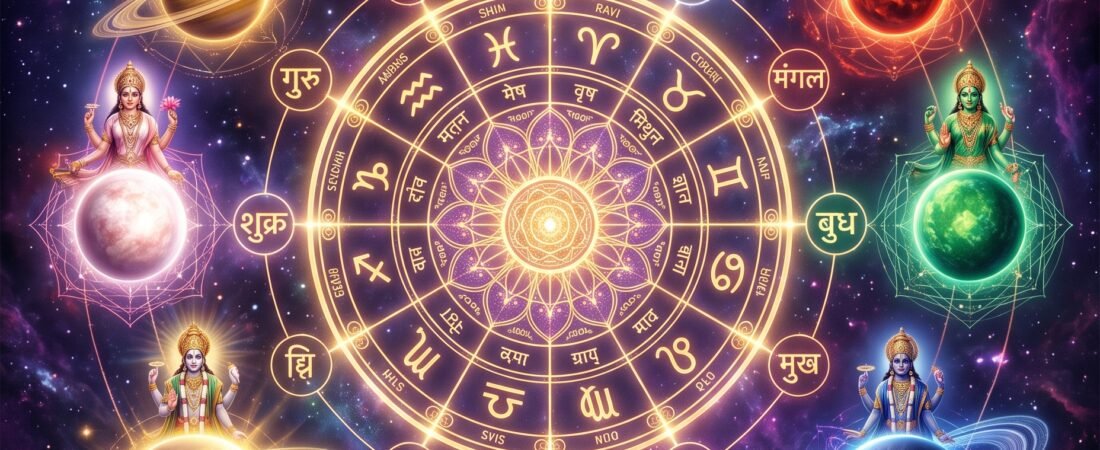
Planetary transits — called Gochar in Vedic astrology — are the real-time movements of planets through the zodiac as they pass over the fixed positions in your birth chart. Every planet moves at a different speed, and when a transiting planet crosses a sensitive point in your Kundli (like your Moon sign, Ascendant, or a house cusp), it triggers specific life events, moods, opportunities, or challenges during that window.
Think of your birth chart as a map of your life’s potential, and transits as the weather moving across that map. The map doesn’t change, but the weather does — and it determines which parts of your life get activated right now.
📲 Download Astrova AI — FREE Astrology App
How Do Planetary Transits Work in Vedic Astrology?
In Vedic astrology (Jyotish), the concept of Gochar (गोचर) literally means “the movement of cows across a field” — an ancient metaphor for planets wandering through the twelve zodiac signs (Rashis). Each planet carries a specific energy, and the house it passes through in your chart determines which area of life gets stirred up.
Here’s the key principle: transits are always read from your Moon sign (Rashi), not your Sun sign. This is one of the biggest differences between Vedic and Western astrology. Your Moon sign represents your mind, emotions, and inner world — so when a planet transits a particular house from your Moon, it affects how you experience life during that period.
The Speed of Each Planet Determines Transit Duration
Not all transits hit equally. The Moon changes signs every 2.5 days, giving you a quick emotional shift every few days. Saturn, the slowest visible planet, spends roughly 2.5 years in each sign — meaning its transit effects are deep, long-lasting, and hard to escape. Here’s the full speed chart:
| Planet | Time in One Sign | Transit Impact |
|---|---|---|
| ☽ Moon (Chandra) | ~2.5 days | Daily mood, emotions, short-term decisions |
| ☿ Mercury (Budh) | ~3-4 weeks | Communication, business deals, learning |
| ♀ Venus (Shukra) | ~3-4 weeks | Love, relationships, luxury, creativity |
| ☉ Sun (Surya) | ~1 month | Confidence, career visibility, health |
| ♂ Mars (Mangal) | ~6 weeks | Energy, conflicts, property, courage |
| ♃ Jupiter (Guru) | ~1 year | Growth, wisdom, children, wealth expansion |
| ♄ Saturn (Shani) | ~2.5 years | Karma, discipline, delays, life restructuring |
| ☊ Rahu / ☋ Ketu | ~1.5 years | Sudden changes, obsession, karmic lessons |
Which Planetary Transits Matter Most for You?
Here’s the honest truth: not every transit affects you equally. You could track hundreds of planetary movements daily, but only a few will create visible shifts in your life. The transits that matter most are those crossing these sensitive points in your birth chart:
- Your Moon sign (Rashi) — when Saturn, Jupiter, Rahu, or Ketu transit over your natal Moon, it triggers major emotional and life shifts. This is the basis of Sade Sati (Saturn’s 7.5-year transit over the Moon).
- Your Ascendant (Lagna) — transits crossing your rising sign affect your physical health, personality, and how the world sees you.
- Your 7th house — any major planet here shifts your relationships, marriage, and business partnerships.
- Your 10th house — career transits. When Jupiter or Saturn cross your 10th from the Moon, expect professional turning points.
According to Brihat Parashara Hora Shastra (BPHS, Chapter 44-45), the transit results of Jupiter and Saturn are the most significant for predicting annual and multi-year life trends, because these “slow” planets create the backdrop against which faster planets trigger specific events.
Major Planetary Transits Happening Right Now (August 2026)
Let’s look at what the sky is actually doing right now and how it might affect you. These are the major transits active in August 2026:
| Planet | Current Sign (Sidereal) | Key Effect |
|---|---|---|
| ♄ Saturn | Pisces (Meena) | Spiritual restructuring, dissolving old illusions, faith tested |
| ♃ Jupiter | Cancer (Karka) — exalted | Emotional expansion, family growth, spiritual wisdom peaks |
| ☊ Rahu | Pisces (Meena) | Unconventional spiritual seeking, foreign connections, dream intensity |
| ☋ Ketu | Virgo (Kanya) | Detachment from over-analysis, health resets, letting go of perfectionism |
| ♂ Mars | Varies (moves every ~6 weeks) | Check your daily Rashifal for Mars-triggered energy days |
The biggest transit story of 2026: Saturn and Rahu are both in Pisces together — a rare conjunction that happens roughly once every 60 years. Vedic texts call this combination a powerful catalyst for spiritual transformation. If you’ve been feeling a deep pull toward meditation, self-inquiry, or questioning your life’s meaning, this transit is likely the reason.
Meanwhile, Jupiter in Cancer (its sign of exaltation) is one of the most benefic placements possible — bringing emotional warmth, family blessings, and intuitive wisdom. The combination of Jupiter’s grace with Saturn’s discipline creates a rare window where hard spiritual work actually pays off visibly.
How to Check Which Houses Transits Are Affecting You
Here’s a simple method anyone can use — no astrology degree required:
- Find your Moon sign. Open the Astrova AI app, enter your birth details, and your Janam Kundli will show your Moon sign (Rashi) prominently. This is your transit reference point.
- Count houses from your Moon. Your Moon sign is the 1st house. Count forward through the zodiac: the next sign is your 2nd house, then 3rd, and so on up to 12.
- See where Saturn sits relative to your Moon. If your Moon is in Aries and Saturn is in Pisces, Saturn is in your 12th house from the Moon — indicating a period of introspection, possible expenses, and spiritual growth.
- Check Jupiter’s position. Jupiter’s transit house shows where growth, opportunities, and expansion are flowing.
This simple two-planet check (Saturn + Jupiter from your Moon) gives you roughly 70% of the transit picture, according to classical Jyotish practice.
How Astrova AI Helps You Track Planetary Transits in Real Time
Tracking transits manually used to require expensive consultations or complex ephemeris tables. Astrova AI automates the entire process:
- 🪷 Free Janam Kundli — Generate your complete birth chart in seconds, with your Moon sign clearly identified as the transit reference point.
- 📅 Daily Rashifal — Your daily horoscope is calculated from your Moon sign and updated with the latest planetary positions, so you always know which transits are active for you today.
- 🔮 Sade Sati & Kaalsarp Analysis — Instantly check whether Saturn’s transit is affecting your Moon sign (Sade Sati) or whether Rahu-Ketu axis creates a Kaalsarp Dosha in your chart.
- 🤖 24/7 AI Astrologer — Ask specific transit questions like “How will Jupiter’s transit affect my career this month?” and get personalized Vedic astrology answers in seconds.
- 🌐 Available in 9 Indian Languages — Hindi, Tamil, Telugu, Kannada, Malayalam, Marathi, Gujarati, Bengali, and English.
📲 Get Astrova AI — 100% Free, No Credit Card
Common Questions About Planetary Transits
1. How is a transit different from my Dasha period?
A Dasha (planetary period) is determined by your birth chart and runs for fixed years — it’s your life’s internal clock. A transit is the current position of planets in the sky right now. Think of Dasha as the “season” you’re living in, and transit as the “weather” happening within that season. Both work together: a good transit during a good Dasha amplifies results; a challenging transit during a tough Dasha can intensify difficulties. Classical texts like Phaladeepika by Mantreshwara emphasize reading both together for accurate predictions.
2. Do transits affect all zodiac signs equally?
No. The same planetary transit creates completely different effects depending on which house it falls in from your Moon sign. For example, when Jupiter enters Cancer in 2026, it activates the 4th house for Aries Moon sign people (family and property growth) but the 11th house for Gemini Moon sign people (income gains and wish fulfillment). This is why generic “horoscope columns” based on Sun signs often feel inaccurate — they ignore the Moon-sign-based transit calculation.
3. Can a bad transit be remedied?
Vedic astrology offers specific remedies (upayas) for challenging transits. The most widely recommended include: chanting planetary mantras (like the Shani mantra “Om Sham Shanaishcharaya Namah” for Saturn transit difficulties), donating specific items on specific days, wearing gemstones after proper consultation, and performing temple rituals. However, the Brihat Parashara Hora Shastra also teaches that some karmic transits must simply be endured — the purpose is spiritual growth, not avoidance.
4. How often should I check my transit chart?
For daily awareness, your Rashifal (daily horoscope) already incorporates the Moon’s fast-moving transit plus slower planet positions. For bigger life decisions — career changes, marriage timing, property purchases — check the Jupiter and Saturn transit positions relative to your Moon sign. A monthly check is sufficient for most people. Astrova AI’s daily Rashifal and AI Astrologer chat make this effortless.
5. Is Vedic transit prediction more accurate than Western?
Vedic astrology uses the sidereal zodiac (based on actual star positions), while Western astrology uses the tropical zodiac (based on seasons). The two systems are offset by about 24 degrees due to the precession of equinoxes (called Ayanamsa). For transit timing, most Vedic practitioners find the sidereal system more aligned with real-life event timing, though this remains a subject of ongoing debate. The key is consistency — use one system and learn its patterns deeply.
Explore More Astrova Guides
- What Is a Janam Kundli and How to Generate Yours Free
- What Is Daily Rashifal and How Does AI Horoscope Work
- Kundli Milan for Marriage: How to Check Compatibility Free
- Sade Sati Explained: What It Is, How It Affects You & Powerful Remedies
- What is AI Palm Reading and How Does It Work?
- AI Astrology vs Traditional Astrologers: Complete Comparison Guide
About the Author
Astrova AI Editorial Team
The Astrova AI Editorial team combines traditional Vedic astrology knowledge with modern AI technology. Our content is rooted in classical Jyotish texts including the Brihat Parashara Hora Shastra, Phaladeepika by Mantreshwara, and Brihat Jataka by Varahamihira — the foundational texts of Hindu predictive astrology. Every guide is written to be practical, accurate, and accessible to both beginners and experienced astrology enthusiasts.
Have a correction or question? We welcome feedback. Reach us at support@theastrova.com
📲 Download Astrova AI — Your Free Vedic Astrology Companion
Frequently Asked Questions
What are planetary transits (Gochar)?
Gochar is the current movement of planets through the zodiac, read against your Moon sign and birth chart to see how present conditions affect you.
Which transits matter most?
Slow planets matter most: Saturn (about 2.5 years per sign), Jupiter (about 1 year), and Rahu and Ketu (about 18 months). They shape the big themes of your life.
How do I check my current transits?
Compare today's planetary positions with your Moon sign and Lagna, or use an app like Astrova AI that shows your personal transit effects automatically.
Related posts:
 How long does Sade Sati last and when will it end for you?
 What Is Shani Dhaiya (Small Panoti) — How to Identify It in Your Kundli and Find Relief
 What Is Gajakesari Yoga — The Rare Jupiter-Moon Combination for Wealth and Wisdom?
 What Is Kemadruma Yoga in Your Kundli — The Lonely Moon and How to Find Relief